• Skip to primary navigation
  • Skip to main content
  • Skip to primary sidebar

Pickleballcard

All About Pickleball Gears

  • About Pickleball
    • How To Play Pickleball
    • Pickleball Rules
    • Pickleball Kitchen Rules
    • Serving Rules
    • Pickleball Ratings
    • Pickleball Tips
    • Pickleball History
  • Pickleball Shoes
    • Best Pickleball Shoes
    • Best Pickleball Shoes For Men
    • Best Pickleball Shoes For Women
  • Pickleball Paddles
    • Best Pickleball Paddles
    • Elongated Pickleball Paddles
    • Graphite Pickleball Paddles
    • Onix Pickleball Paddles
    • Pickleball Paddles for Women
    • Pickleball Paddles For Spin
  • Vs
    • Pickleball Vs Tennis
    • Paddle Tennis Vs Pickleball
    • Indoor Vs Outdoor Pickleball

How To Build A Pickleball Practice Wall | Pickleball Wall Drills

September 20, 2026 by Jeena Noven

The guide discusses the pickleball practice wall and tells about how you can practice pickleball on a wall, and its pros and cons.

Like every other sport, practicing pickleball is essential to mastering the game. But there are times when you do not have access to a pickleball court for practicing the game. Well in such a case you just don’t need to worry because the best thing about the game is that you can practice the game even without physically visiting the pickleball court.

Yes, you can practice pickleball on a wall as practicing the pickleball shots against a wall not only helps in improving the speed and footwork of the player but also helps in maximizing the accuracy, precision, and reaction time, and provides the overall control of the ball. Here in this guide, we will particularly discuss the pickleball practice wall, why practicing pickleball is important, how you can make a pickleball practice wall on your own and what are the pros and cons of practicing pickleball.

Pickleball Practice Wall

We are going to discuss everything about the pickleball practice wall so you can get to know about the information related to practicing pickleball on a wall. Let us without wasting any more time shed light on the detailed analysis of the pickleball practice wall.

Pickleball Practice Wall

Here in this guide, we are going to cover the details about the pickleball practice wall, why practicing is important, how you can make a DIY practice wall, and other relevant information. Let us first look at the importance of practicing and then we will look at the top pickleball wall drills and the step-by-step procedure to make a practice pickleball wall on your own.

Why Is Practicing Important?

Practicing pickleball not only makes a player perfect in the game but also makes you learn different techniques and increases your pickleball skill level. You can easily practice pickleball on the wall if you do not have the availability of the opponent player.

Practicing pickleball on the wall also increases your control over the ball and also gives you numerous other benefits. It makes it easier for you to learn new techniques. You can practice new techniques and improvise the gaming techniques by making them more sharp, smart, and flawless.

Moreover, your shots will become much better with continuous practice and you will enjoy a great time with yourself while playing your favorite game, pickleball. This is because practicing against a ball does not require a partner and you can play the game all independently.

Well, this is a great exercise to improve your strokes and work on your shots to improve them. Practicing pickleball on the wall is great for warm-up before a game too. Moreover, pickleball practicing with a wall increases your footwork which helps in the game to deliver a good response against the ball.

How To Make A Pickleball Practice Wall?

If you are looking to practice pickleball on your wall and want to make your DIY pickleball practice wall, this section of the article is for you. Pickleball practice wall-making at home is quite a simple method.

1. Selecting The Right Wall

The first and foremost important thing when creating a DIY pickleball wall is to focus on the selection of the right wall. The wall you should choose should be flat and sturdy and should also provide you with the required area for your practice. For this purpose, the garage and backyard walls are considered ideal.

2. Proper Cleaning The Wall

After selecting the wall, you have to make sure that the wall is clean. It should not have any dust, dirt, or debris particles. This is because a clean wall provides you with a good, smooth, and uninterrupted experience of practicing pickleball.

3. Mark The Target Area

You can use tape or chalk to mark target areas for your pickleball practice. What you have to do is mark a line in the horizontal direction at a non-volley zone height and make sure to keep it straight. Keep in mind to mark a small target for better and more focused practicing experience.

4. Set Up The Net Line

If possible, place a net line on the wall exactly equal to the height of the original net. This will assist you in hitting the shots over the net. With this, you will be able to control your hands and foot movement properly while playing pickleball and will also be able to control your shot selection.

5. Add Padding

You can use the foam or padding on the wall to reduce the sound of noise and the impact of hitting. For this purpose, you can use padding material and foam tiles that are readily available in local hardware stores.

6. Ensure Safety

Whatever place you have chosen for your practice, first confirm that there is nothing harmful. The area of practice should be completely safe. If you notice something harmful is there that can harm you then remove that first, as leaving it as it is can cause you trouble.

Pros And Cons Of Practicing Against A Wall

Advantages

1. Affordable

Practicing pickleball on your own against a wall is free of cost. In this method, you only need a ball, a racket, and a paddle.

2. You Don’t Need Partner

Practicing pickleball against a wall is convenient and much easier because you can train at any time and all alone. You don’t need to wait for a partner to start practicing.

3. Reflexes And Reactions

Practicing pickleball against a wall is the best way to work on your reaction time and your reflexes. When the ball rebounds from the wall while practicing pickleball against a wall, it helps you develop skills for managing the fast shots in a fast-paced game.

4. Consistency

Pickleball wall practice allows you to perform repetitive shots that are useful for increasing muscle memory and also help you in playing a longer game.

5. Control

It helps you to improve your pickleball technique for your game. Practicing pickleball against a wall gives you better control over particular aspects of the game including swing, grip, and footwork.

Disadvantages

1. Lack Of Genuine Game Conditions

Wall practice doesn’t work like a real game. Like an opponent hitting shots in the real game, wall practicing doesn’t give you that similarity. Moreover, the wall practicing also lacks spin variations and tactical gameplay, unlike games where you have opponents against you.

2. Space Limitations

If you do wall practice, you have limited wall area and surrounding space which does not perfectly replace the real court dimensions. This puts restrictions on your practice.

3. Limited Feedback

It is impossible to get feedback on your game strategy or technique with wall practicing. This makes the wall practicing less challenging and the player takes the game easy. Consistent practicing without any feedback restricts the player from growing.

4. Limited Scope

When you practice on the wall you work on selective shots and strategies. Strategies like volleying or serving can’t be replicated while practicing on a wall.

5. Overuse Injuries

You are more prone to overuse injuries when doing wall practicing for pickleball. This is because you perform repetitive shots consistently and in case they are wrong they can harm you and can cause serious injuries.

Benefits Of Pickleball Wall Practices Or Drills

Technique

This is a great way to increase your stamina and improve your techniques, and when you practice alone, you get a great opportunity to focus on yourself.

Control

When you hit the ball on the wall It always comes back to you and this makes it quite difficult to control your shots. This is because the wall never misses the shot. This continuous practice on the wall makes it easier for the player to control the ball and continue the game for longer. In this way, you can learn how to control the ball in a little space while practicing against a wall.

Consistency

Practicing against the wall is the best way to improve your consistency level as the game goes on and never stops because the wall never misses the shot and it always comes back to you.

Hand Speed ​​And Reaction Time

When the ball hits the wall and comes towards you, it comes back at a high speed. You get very little time to return the shot. This ultimately makes it good for you to increase your hand speed, and coordination and improve your reaction time.

How To Practice Against The Pickleball Wall?

Here is the detailed description and some effective tips regarding wall practice that are beneficial for you and you will increase your skills and your game style by following them. So without wasting any time let us move ahead with the tips below. We will discuss,

  • Proper Planning
  • Mark the net
  • Vary your pace
  • Footwork

Proper Planning

Always keep in mind that whenever you start your game, make your plan before that. You can make a plan to practice pickleball by finalizing how many shots you have to hit in a certain period or by focusing mainly on playing a particular shot again and again to get perfection.

Foot Work

Keep moving your feet continuously like you do in a real match. Do not stand in one place, this is very important and will help you a lot.

Mark The Net

If you are using a common wall for practice, then first make a mark on it equal to the height of the net. This will help you to practice and you will have a visual of the real net in front of you. Apart from this, you can also take the help of tape for taping for baseline and service lines so that you can have a correct idea of ​​the distance.

Vary Pace Of Shots

Use variation in your shots. Don’t play at the same speed and show some aggression while hitting. You can shift your shots speed from fast paced to slow paced and from slow paced to fast paced.

Pickleball Wall Drills

Pickleball wall drills are a fast and easy way to improve yourself at pickleball when you don’t have a partner. You can easily vary the speed and angle and practice different shots, including serve, dinks, third shot drop, forehand, and backhand. Your goal for doing wall drills alone is to improve your skill level, confidence on the court, and ball-hitting techniques. These drills also help you to build consistency, ball placement, and body stamina, which is essential to becoming a pro at pickleball.

1. Practice Your Serve

Practicing your serve against a wall is a great way to improve your pickleball serve. Stand a few feet away from the wall, hold your paddle with the proper grip, and then practice hitting the ball with the same amount of force that you actually do on the court. By practicing regularly against the wall, you can improve your pickleball serve consistency and accuracy.

2. Practice Your Dink

The pickleball dink shot is a soft and controlled shot used when you are close to the net. For dink drills against the wall, draw two lines: one is an imaginary kitchen line 7 feet away from the wall, and the other is a net line at the center of the wall. Now, by standing behind the kitchen line, try hitting the ball above the net line at the wall. Repeat the same process for backhand dink shots after you feel confident with forehand dink shots.

3. Practice Your Volley

Practicing pickleball volleying against the wall helps to build your confidence, shot placement, and hitting techniques. Practice forehand and backhand volleys in the same pattern as the dink drills. Stand behind the non-volley zone line and keep the ball low and controlled. Do practice volleys at different angles and with various speeds to build your accuracy and control.

4. Practice Your Target Shots

Doing specific target drills helps improve shot placement and accuracy. You can use a small target on the wall or between the kitchen line and the practice wall, like a circle drawn with chalk or a line with tape. You can also divide the wall into different zones and try hitting them at various angles. These target drills help you improve your accuracy and speed when you are playing on the court.

5. Practice Your Groundstrokes

To practice groundstrokes, you can consistently hit the ball above the net line and then do the same with a backhand shot. You can also practice by mixing both by 3x forehands and then 3x backhands.

6. Practice Your Drop Shot

The drop shot is the most important in pickleball, helping you regain control of the game. You can also practice shot drop by using a shoe box placed above the net line on the practice wall. Standing 6-8 feet from the wall, try to drop shot the ball directly into the box. This will help you perform a well-placed drop shot on the pickleball court.

Frequently Asked Questions

What Is The Best Material For A Pickleball Wall?

Plywood is the best material for making a pickleball wall. For making a perfect size of pickleball wall you need two sheets with a size of 5 feet by 5 feet. This will give you a 5-foot high wall which is 26 inches high depending on the height of the net and is great for practice.

How Can I Practice Pickleball At Home?

You can practice pickleball at home by using a wall. To make it perfect, you have to draw a line of 34 inches in height which is the standard height of the net used in pickleball. After this, you have to draw a line of 7 feet in length and now you have to draw a net properly to practice the game and become the best player.

What Are The Skills Needed To Play Pickleball?

Any player who wants to achieve success in pickleball should focus on these three skills as these are very important for him. Whoever learns these three skills can have a complete grip on the game. The skills include hand-eye coordination, footwork, and agility.

Is Pickleball A Sport Or A Game?

Pickle is a mixture of tennis, ping pong, and badminton. Pickleball is a sport, played using a paddle and white ball with holes.

Turn Wall Drills Into a Session: Count Streaks, Not Minutes

A wall session improves you fastest when it has a score. Pick two or three drills from this guide and work each one in a five-minute block, counting your longest streak of clean contacts instead of watching the clock. Set a target — twenty controlled dinks against the tape line, say — and only step farther from the wall, or speed the ball up, once you can hit that target twice in a row. Finish while your form is still tidy. It is the same streak-counting structure behind effective pickleball drills, and it turns casual solo practice into measurable progress.

Final Thoughts

Hopefully, you have gone through this article that tells you about the detailed analysis of the pickleball practice wall and how you can practice pickleball on a wall on your own. The guide also tells you about the detailed step-by-step procedure on how to create your own pickleball wall. Make sure to pay attention so you do not miss anything important and can practice the game to get perfection within no time.


Other Related Posts:
  • Pickleball Machine Drills
  • Best Pickleball Shoes
  • Cost Of Building A Pickleball Court
  • Rally Scoring In Pickleball


Jeena Noven, Pickleballcard Author
Jeena Noven

Jeena Noven is one of Pickleball Card’s main writers for rules, ratings and everyday play. She focuses on the questions players actually argue about on court — scoring, faults, ratings and match situations — and checks each answer against the current USA Pickleball rulebook before it goes live. Her guides are written for real club players: clear first, technical when it matters, and updated when the rules change.
Filed Under: Strategy & Training

Pickleball Machine Drills To Improve Your Game

September 15, 2026 by Jeena Noven

Explore how we can use a pickleball practice machine for training and learn methods to drill beginner, intermediate, and advanced-level shots.

Beginners frequently complain that they cannot find pickleball practice partners but now the training has become easy as one can use the pickleball practice machine. It is a tireless couch that helps you train and improve muscle memory for pickleball. Practice is the only way to transform from a beginner to an advanced player, but practice partners are not available 24/7.

On the other hand, you can use the practicing machine that can help you increase the level of your game and make you an efficient pickleball player. Being a pickleball coach, I can understand the problems most pickleball players face but pickleball machine drills can pave the way to success. Come with me to explore techniques, strategies, and drills to improve your level in pickleball with the help of a training machine.

Why Do You Need A Pickleball Machine?

There are various reasons why you need to purchase and use a pickleball machine. Firstly, it is a tireless coach that can help you practice whether it is midnight or early in the morning.

You can use the machine to practice anytime based on your routine. The majority of people complain that they do not play pickleball because they cannot invest additional time in the beginning to learn the game.

But you do not need to spare hours from your busy routine as you can use pickleball practice machines to learn basic tactics. Secondly, it can reduce the cost of hiring a coach and joining a club. Couches charge hundreds of bucks monthly to train beginners as well as they give limited time but if you have a pickleball practice machine, you do not need to manage the budget as well as you can use it for hours.

Thirdly, you can change the settings of your machine according to your level. Let’s say, you are a beginner who started playing pickleball for the first time; therefore, you are hesitating to use the paddle in the group of advanced pickleball players or the presence of your coach. But if you have a machine, you can practice in the back of your house, train yourself alone in the beginning, and change the difficulty level to increase the intensity, speed, and height of the ball.

How To Use Pickleball Machine For Drill?

Practice machine makes life easy by eliminating the need for a practice partner. The purpose of the machine is to improve the level of the player by allowing him to practice for hours. We can use the machine as a beginner as well as intermediate and advanced players can use it.

How Does Practice Machine Work? The machine is designed in a way that feeds the ball to throw it towards the player. It fires the ball at a certain speed, and trajectory, and with a consistent rhythm. There are further types of practice machines such as oscillating and programmable machines which we can use for various purposes.

Pickleball Machine Drills For Beginners

As I have mentioned above, all levels of players can use the machine for practice. Some experts object to beginners using a practice machine because they think that at the start of a game learning, we should play with human partners rather than machines. They say that machines have limited strategies and maneuvering plans while others claim that machines are good for learning the basics of pickleball.

It is true that machines have limited strategies and cannot maneuver like humans but still, we can use machines to learn pickleball. Beginners can learn basics such as forehand drills, backhand, and groundstrokes or dink shots. Let’s explore how to use machines to learn beginner-level techniques.

Forehand Drive

Forehand is a fundamental shot in pickleball often used at the beginning of the game just like tennis. Practicing forehand is the most important part of a beginner’s quest to learn pickleball. You can use a pickleball practice machine to drill the forehand dive, all you need is to set the machine next to the net in front of you.

Do not set the machine at the end of the court, always set it in the middle of the baseline for effective results. Once you are done with the placement, change the feeding setting at two-second intervals so you can effortlessly play the ball one after another. In my opinion, a two-second interval is ideal for beginners but if you still find it difficult to play then increase the interval duration.

Pickleball Forehand Drive

Grip the paddle with balanced force and slightly bend your knees then prepare yourself to hit the ball. Your focus plays an important role in the game; therefore, be attentive as the machine starts firing the ball. First start learning to hit the ball with the sweet spot of the paddle in a particular direction then change direction and start playing spinning shots.

Backhand Drive

Another shot that can transform you from a beginner to an advanced player is the backhand drive, one of the most played shots in pickleball. In the beginning, it is very difficult to play the backhand shot but one can improve by persistently practicing. Backhand is a dink volley shot that can spin the ball at high speed and is hard to catch for an opponent.

To learn backhand you need to place the machine in the middle of the baseline and set it at the two-second interval. Backhand is difficult to play for beginners but if you successfully learn it, you can use it not only for volley but in the middle of the game. You need to prepare yourself after setting the place and interval duration.

Pickleball Backhand Drive

Grip the paddle with both hands like holding a tennis racket, your dominant hand should be lower and tight while the second one is on the top of the bevel to control the paddle’s movement. Bend the knees slightly and hit the ball with maximum strength so that it goes high in the air on the opponent’s side. Practice hitting the ball without spinning and once you have learned the basics then use spinning.

Dink Shot

The above two are used in the middle but widely played at the beginning of the game. However, a shot that can be used in the middle or at the end of the match is a dinking shot which will not only make you a winner but also enable you to identify the weaknesses of the opponent. We can use a pickleball machine to learn the dink shots.

Set the machine in the middle of the baseline and change the ball fire speed to moderate. Start with the moderate-speed fire and then increase the speed when you think that you can handle the moderate-speed coming balls.

Intervals are also important to practice the dink shot so change the duration to 4 or 6 seconds in the beginning then shorten the intervals over time. Another factor you should notice while adjusting the settings is changing the elevation to low.

Grip the paddle softly, bend down your knees, and keep your focus on the ball. Hit the ball with minimum power so that it crosses your kitchen area and lands right after the net of your opponent. Keep the ball’s speed and height slow as well as target the cross-court side to conquer the kitchen area of your opponent.

Pickleball Machine Drills For Intermediate

Intermediate players can also get benefits by using the pickleball practice machine. Mostly, intermediate players are familiar with the forehand, backhand drives, and dink shots but they face a tough time playing the defensive and offensive lobs. Additionally, they can use a practice machine to drill the angle shots, now come with me to learn intermediate machine drills.

Lobs

Lobs are the high shots we can play to take the ball to the opponent’s side and land it in the middle of the baseline. Lobs are very useful if you play them smartly. There are two types of jobs you can learn with the help of a pickleball practicing machine: the offensive and defensive lob.

Offensive Lob

A heightened and deep delivery in cross-court direction targeting the end of the court to take the ball above the opponent’s head. Place the machine on the baseline on the other side of the net and change elevation to high, speed to fast, and duration to 3-second intervals. Use your paddle in a way that hits the ball up in the air at the maximum trajectory and in a cross-court direction then land it deep in your opponent’s area.

Defensive Lob

The purpose of an offensive lob is to make it difficult for the opponent to play the game while a defensive lob is played when we are losing control over the game. Follow the same instructions I mentioned in the Offensive Lob section, and hold the paddle softly. Hit the ball in an upward direction but with less force compared to the offensive lob and take the ball to the end of the baseline of your opponent’s area.

Angle Shots

Angle shots are as significant as the volley, dink, and lobs. Intermediate pickleball players focus on controlling the speed and the height of the ball but very few of them are familiar with the fact that angle plays a more pivotal role compared to speed and height. There is a list of the angle shots but all require similar practice.

  • Cross Court Shot: Set the machine in the middle of the line and change speed to moderate then practice hitting the ball in your opposite or diagonal direction.
  • Straight Line Shot: Set the machine in the middle of the baseline and increase the speed of the ball to high then practice hitting the ball straight in a line with moderate speed and desired elevation.
  • Drop Shot: Set the machine in the middle of the baseline and increase speed, decrease the height of the ball then practice landing the ball right after the kitchen area of your opponent while maintaining moderate force.

Pickleball Machine Drills For Advanced Players

Advanced players efficiently play all kinds of shots, lobs, and dives in various directions, maintaining speed, height, and angle. But they should practice deceptive shots, spin, and strategic dives. They can use a pickleball practice machine to drill these shots.

Deceptive Shots

We can turn any shot into a deceptive one by changing the body’s posture, position, and gripping style to hold the paddle. A deceptive shot is used to trick the opponent by portraying to him that you are about to miss the shot but unexpectedly hit the ball with proper strategy.

Learning deceptive shots is a long-term process in which you need to master position, posture, gripping, and strategy-making. Most professional and advanced players plan the entire game, identifying the weaknesses of the opponent and then launching deceptive shots based on the opponent’s downside.

Not all kinds of deceptive shots are useful as some players are good at detecting the deceptive and a normal shot while others require time to process the return so launch a shot based on all these conditions. You can practice by placing the machine in the middle of the baseline and adjusting the speed, elevation, and angles.

Your pickleball skills play a significant role in launching a deceptive shot but the expressions and body posture is more important. It is the body language that indirectly conveys to us the type of shot our opponent intends to play and if he can fake his body language, we cannot assess the incoming shot. Therefore work on your body language rather than polishing skills.

What Kind Of Machine Should You Use?

When it comes to the practice machine, we have two major choices: The Lobster pickleball machine and the Spinshot pickleball machine. Each is useful in its way but used for various purposes.

The Lobster machine drills are for the players interested in consistency and control. More precisely, these machines are for beginners and intermediate players while Spinshot machines are for advanced and professional pickleball players.

Lobster Pickleball Machine Drills

A Lobster Machine is perfect if you just started playing pickleball. These are simple-to-use machines designed for beginners who are drilling fundamental pickleball shots. The Lobster machine is used for learning consistency and control.

It has various futuristic features including oscillation and programming. The oscillation feature enables the machine to start firing the ball in a direction and change the angle or direction with each shot. The feature is very useful for beginners who are training to hit the ball while moving from one end to another.

Programming is a feature that helps you design the entire game with the machine. You can set the angles, elevation, speed, and intensity of the shots. Once you program the Lobster machine to fire according to certain instructions, it will throw balls following the program.

Spinshot Pickleball Machine Drills

If you are familiar with all kinds of fundamental shots, you can use the Spinshot Pickleball Machine. It is designed for advanced and professional-level players who lack the skills of topspin, backspin, and deceptive shots. The Spinshot pickleball machine has upgraded software compared to the Lobster machine.

Users can customize all kinds of features such as pace, trajectory, angles, flexibility, spin, and placement. It also offers upgraded oscillating and programming features compared to the Lobster machine.

It can throw the ball in various directions from left, right, or in the middle without letting the player know the ball’s next direction. Anyhow, you can choose one of them based on your game level and requirements.

Frequently Asked Questions

What Is The Maintenance Of A Pickleball Tutor?

A pickleball machine does not require maintenance like other sports, such as tennis or football tutor machines. However, the user should regularly clean the internal ball-throwing wheel for desired results if he uses the machine daily.

Can You Practice Pickleball At Home?

Yes, you can practice at home by using a pickleball machine. The machine does not require more room nor is it complicated to use. It is designed in a way that all levels of players can use it if they do not have a practice partner or cannot visit a court daily.

How Long Does A Lobster Battery Last?

The battery duration depends on multiple reasons, such as the way you use it, overall battery quality, or your game style. However, the average recorded duration is 3 to 4 hours.

The Machine’s Blind Spot: Perfect Feeds, Imperfect Preparation

A machine’s strength is also its trap: it never feeds you a bad ball. Groove a stroke against identical feeds and it can collapse the moment a human hits you something awkward. So use the machine like a scientist: change one setting at a time — speed for a block of balls, then placement, then a shorter interval — and note which change breaks your form first, because that weakness is where your drills should aim. Then finish against a human when you can: as every solo practice player learns, repetition builds the shot, but only variety builds the player.

Final Thoughts

Talent alone does not make someone a winner unless he works on polishing his skills and learning new techniques and tactics. Pickleball is a simple game for those who know how to play it, but it can become a nightmare if they visit the court without proper practice. The major problem people face is that their practice partners are not available 24/7, as well as coaches or trainers charge hundreds of bucks for 1 or 2 hours of training.

If you also have similar problems then I advise you to get a pickleball training machine and start drilling the shots. I have explained everything about pickleball machines and how you can use them for drilling. Whether you are a beginner or a professional player, you need to practice properly with dedication and repeat each shot again and again to learn it perfectly, so get a machine and start working on yourself.


Other Related Posts:
  • Best Pickleball Shoes
  • Rally Scoring Pickleball
  • Pickleball History
  • Is Pickleball In The Olympics?
  • Best Pickleball Shirts


Jeena Noven, Pickleballcard Author
Jeena Noven

Jeena Noven is one of Pickleball Card’s main writers for rules, ratings and everyday play. She focuses on the questions players actually argue about on court — scoring, faults, ratings and match situations — and checks each answer against the current USA Pickleball rulebook before it goes live. Her guides are written for real club players: clear first, technical when it matters, and updated when the rules change.
Filed Under: Strategy & Training

7 Pickleball Dinking Strategies To Win The Game

September 14, 2026 by Jeena Noven

Explore simple pickleball dinking shot strategies and dinking drills as well as see how to play pickleball shots effectively.

Pickleball has become one of the fastest-growing games in America due to its simple rules and entertaining nature. People take it as a fun game; additionally, it is a low-impact activity so aged people, slightly disabled, and young all can play it. Pickleball enthusiasts find ways to trick their opponents, use strategies, such as dink shots or hard shots as well as plan the entire game to win the match.

Pickleball is an easy-to-play game, but if your opponent is more skilled compared to you, the chances are high that he wins the match. Therefore, you should learn the strategies of pickleball, such as dink shot methods, dinking drills, and rules of the game so you can also leave your opponent astonished when the match finishes. If you want to become undefeatable then follow my lead to learn the dinking strategies of pickleball.

What Is A Dink Shot?

The majority of beginners find pickleball terms hard to understand such as dinking, volley zone, kitchen, etc. Dinking is a soft short used in pickleball to take the ball to the other side of the net. It is not as simple as it seems because one has to plan the placement, pace, and consequences of the shot.

Dinking requires a slight swing that you can execute by brushing your paddle on the back of the ball. It also requires accuracy because if you imperfectly hit the ball, your opponent can get a chance to hit it back on a spot where you cannot approach it. In short, dinking is a complex soft short that requires a considerable amount of planning before execution.

What Is The Purpose Of Dink Shot?

People often ask about the purpose of a dink shot because it is a soft delivery that your opponent can play effortlessly so why is it required? Dinking is a strategic short that can affect the pace of the game and help you plan further strategies. For example, you are on the court with your opponent, both are highly confident about the victory and the game is getting faster as it advances.

A fast-paced ball comes toward you and you hit it softly instead of attacking with full power. Your action will certainly slow down the pace of the game and your opponent who was expecting a quick attack will be confused to anticipate the slow-paced ball near the non-volley zone. As well, it will also help you plan further strategies as the game is slow now, you can plan whether you need to be attacking or defensive.

Furthermore, a dink shot is used when a player is losing control over the non-volley zone of the opponent. If you continuously focus on the dinking shots, you can push the opponent near the baseline and leave him with no choice except to hit the ball from the end of the court. Lastly, it helps you test the patience of the opponent and if you use dinking shots efficiently, you can bring down the stamina of your opponent.

Slow Vs Fast Paced Games

Beginners often underestimate the importance of dink shots while advanced and professional players are familiar with the fact that dinking can make them win within minutes. Beginners focus on fast-paced games and consider that playing pickleball at a high pace can transform them into advanced players. But the best pickleball player is one who can control the court whether the game is fast or slow.

Additionally, a fast game is simple to play if you compare it with a slow-paced match. Because we cannot implement strategies except a few in fast-paced games but we can make the slow-paced game complicated so we should rely upon dink and soft shots compared to attacking deliveries. Let’s begin understanding how to use dink shots.

Pickleball Dinking Drills

The posture you acquire, the way you grab the pickleball paddle and your focus can shape the effectiveness of a dink shot. Therefore, it is highly recommended that one acquire the perfect position, grip the paddle in the right way, and focus on the ball as well as on the opponent.

Positioning

Bend your knees slightly and acquire a balanced stance when the opponent is about to hit the ball. The majority of the players reveal their further strategies of the game by acquiring a position before it is required. So you should prepare right before you intend to hit the ball softly so the opponent cannot assess your next move.

Let’s say you planned that as your opponent starts attacking with fast-paced shots, you will immediately give the ball a soft touch to trick him. As your opponent attacks, you also hit the ball at a fast pace but acquire the position right after you hit the ball and when your opponent hits it back with strength, you give it a slight touch.

Gripping

Grip plays a pivotal role when it comes to a dink shot because it determines the accuracy, position, pace, and swing. If you are playing a fast-paced game then grip your paddle tight, but dinking requires a soft grip; therefore, slightly loosen your grip to maintain the control. Keep your paddle facing your body and try to hit the ball with the sweet spot of your paddle to get the desired results.

Pickleball Dinking Strategies

1. Placement

Dinking is a simple way to trick the opponent by launching a soft shot but it does not mean that we should execute dinks whenever we want. Instead, we should use the dink short very smartly so the opponent is unable to anticipate the ball’s position. For this, you need to identify the weakness of your opponent and then dink the ball in that direction.

The majority of the players are right-hand oriented so they face a hard time hitting the ball on their left side. If you want to make it more interesting, then you can dink the ball on the left side of the player with a balanced force.

Its height should stay low and go near the baseline of the opponent’s side. In this way, you are not only limiting the activity of your opponent but also getting enough time to prepare yourself for another strategic hit.

Pickleball court is designed in a way that players require more energy to hit the ball on the sidelines. So if you are planning a dink, you can hit it in the direction of the sidelines. In my opinion, you should hit straight but brush the paddle on the back of the ball so it swings in the direction of the sideline, and as a result, your opponent will fail to hit the ball.

In case you cannot find a weakness of your opponent then I will advise you to target his feet. Hitting a ball coming towards feet is not only difficult but also troublesome as one loses balance while spotting the ball’s direction. Try to force your opponent to hit upward and then target the feet.

2. Changing Angles

Angles can make you a winner, and a tough player and if you understand their use, you can defeat anyone. Usually, people do not focus on the angle at which they hit the ball but it can determine the fate of the game. Mindlessly hitting the ball without considering the importance of the angle can result in your defeat.

3. Cross Court Angle

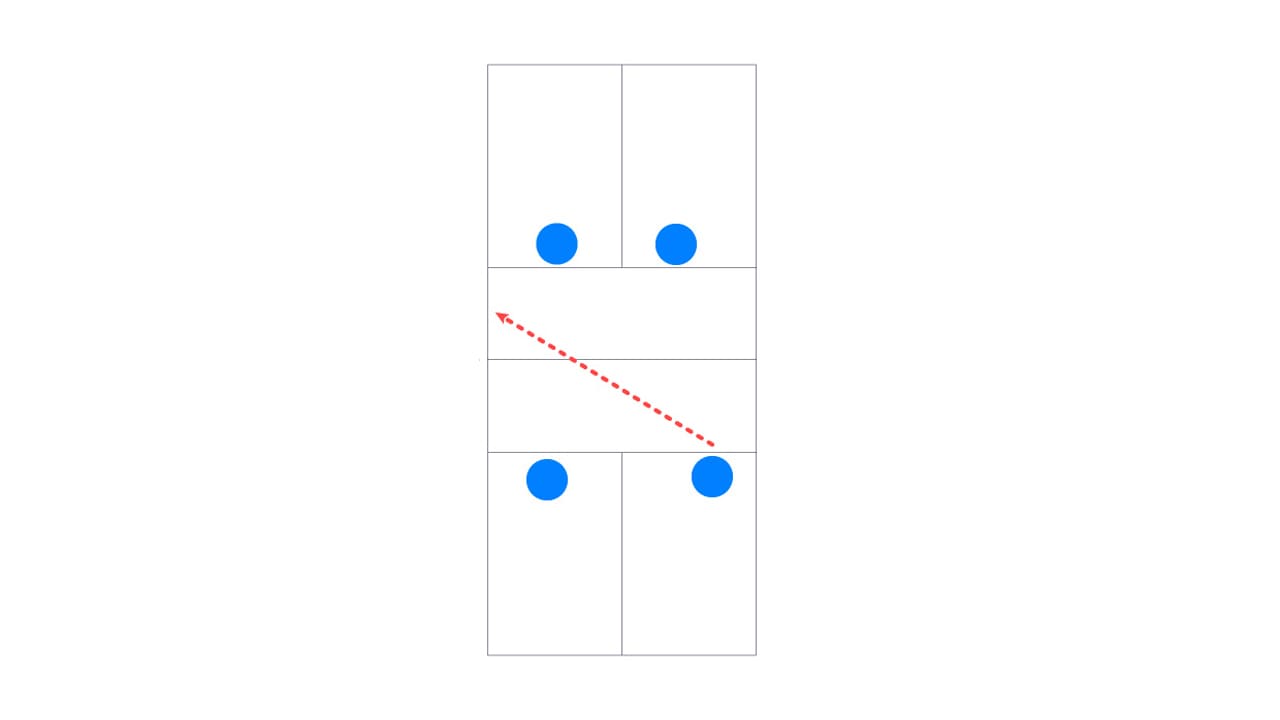
Instead of hitting the ball in the same direction one after another, you should hit it in a direction that is opposite to you. For example, your stance is in the right sideline of the court so you can hit in the left direction towards the baseline, keeping the ball height low and speed at slow. Cross-court angle dink shots are useful because they force the opponent to cover a large distance from one position to another in a diagonal line.

Cross Court Dink
Cross Court Dink

Cross-court angle dink shots are very useful if your opponent is playing fast and you launch a slow-paced shot in the middle of the game. It helps you create openings because the opponent requires you to hit the ball after approaching in the opposite direction and as a result, you can exploit the gap created by your opponent. It also helps to affect the stamina of the opponent.

4. Straight-Line Dinks

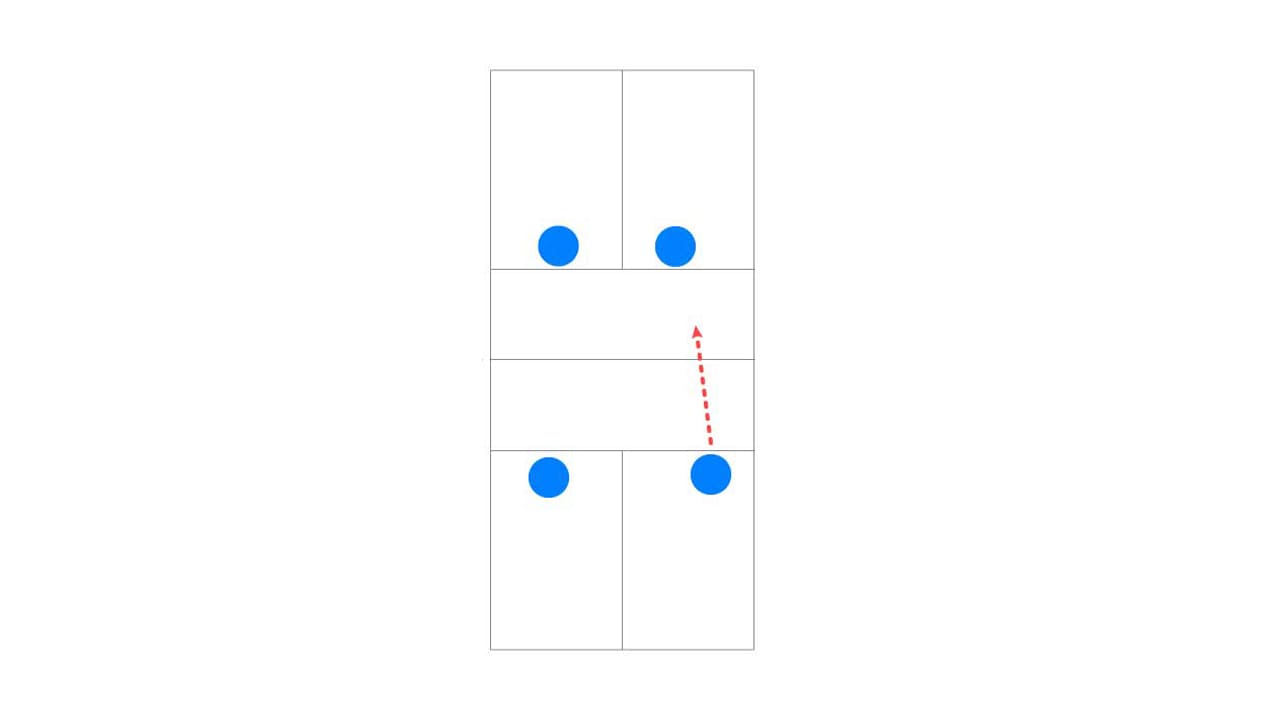
Straight-line dink shot is very simple to play, that’s why majority of the beginners do not use it but they should know that it is more crucial compared to the cross-court dink shot. The purpose of a straight-line dink shot is not to trick the opponent or to slow down the pace of the game but to gain control over the non-volley zone.

Straight-Line Dinks
Straight-Line Dinks

If a player loses control over his non-volley zone, he can lose the game but we can use straight-line dink shots to neutralize the speed of the game and gain the area of non-volley. All you need is to hit the ball in the same direction at a low pace and height so the game goes slower and you gain control over the area.

5. Determining Height

Strategies should be changed as the match progresses; therefore we cannot say that one should always keep the height of the ball low in all conditions. Sometimes, the weakness of an opponent is the heighted shot and he can effortlessly play the low shot. Majority of the pickleball players consider that a dink shot always has a low trajectory but this is not true.

A dink shot is not extraordinarily heightened, nor is it very low but balanced. However, a dink shot is low compared to the average pickleball shot and we can increase the height of the ball based on the conditions. If you hit the ball in the same manner one after another, you cannot win the game; therefore you need to change the height and hit mixed shots.

6. Alter Speed

A pickleball player always keeps the ball in control by maintaining its speed. Whether you are an active player or you like passive or slow games, you need to learn the art of controlling the speed. Controlling and maintaining speed does not mean that a player always hits the ball with the same force he used in the previous shots but it means one should be efficient enough to decrease or increase the speed of the ball.

A dink shot is always slower than the average shot. Some people consider that a fast, low-height hit is also a dink shot but the fact is the opposite. However, one should always change the speed of the ball with each hit to keep the game challenging for the opponent.

If you hit the ball with the same force, your opponent will understand the weakness and return the ball in a way that you will be unable to approach it; therefore, always alter the speed of the ball with the passage of time and conditions. Then comes the space, timing, and flow of the ball that should be changed with speed.

The rhythm of the game is very important to control the court, it involves the space, time, and flow of the match. If you play pickleball with the same rhythm, you can lose the match. The purpose of a dink shot is to change the rhythm, it is a way to alter the speed, flow of the match, and timing.

7. Tricky Shots

Pickleball seems simple but when it comes to the tricky shots, it is one of the most interesting games in the world. Some people consider that pickleball requires only physical energy but they ignore the fact that one also needs high mental activity to win the match. It is the only game in which you can win if you know how to execute a deceptive shot.

You can practice fake dinks by learning how to portray yourself as you are preparing to hit the ball with full force but in the end, you touch the ball softly. You also need to learn the fake posture of a dink shot in which you convey an indirect message through your posture that you will launch a dink shot but hit the ball with full force and at a maximum height.

Moreover, you should learn how to spin the ball in the left and right direction. Spinning is not difficult to practice as one has to brush the paddle on the back of the ball in a way that changes the direction when it hits the ground. Without spin, you cannot make a difference, but it is simpler to trick the opponent if you practice spin.

Spinning makes it harder for an opponent to anticipate the direction of the ball after it bounces. You can use backspin in which the ball rotates backside when it bounces on the court, you can also practice topspin in which you can change the direction of the ball from low to high.

How To Hit Dink Shot Effectively?

The only way that can help you use dink shots effectively is by practicing. Mostly, beginners do not focus on the practice and try to use complex shots on the court in the middle of a match but it cannot make you an efficient pickleball player. If you want to become an extraordinary player then use pickleball shots smartly.

As a coach, I frequently advise my trainees to learn a unique shot for a specific timeframe. For example, if you are learning a cross-court dink shot, you need to practice it for more than 2 weeks to become efficient. Once you consider that you have practiced enough and can play the specific shot on the court then advance forward learning a new unique shot.

Frequently Asked Questions

What Is A Dink Shot?

A dink shot is a soft shot to land the ball near the non-volley zone of the opponent so he cannot approach it and if he does then he cannot play it efficiently. A dink shot should be slow and have low height compared to an average pickleball shot.

What Is The Best Way To Dink Pickleball?

The best way to dink the ball is to hit it in a way that it softly approaches the non-volley zone of the opponent. The best dink is not a low shot but when we dink over the net above a foot.

Why Is There So Much Dinking In Pickleball?

There are various reasons why people use dink shots as some use it to control the game while others launch dink shots to trick the opponent. It is a useful shot that’s why there is so much dinking in pickleball.

The Middle Dink: The Strategy That Starts Arguments (Theirs)

When in doubt, dink to the middle. A ball placed at the seam between two partners forces a split-second decision — whose ball is it? — and that hesitation is worth as much as perfect placement. Middle dinks also shrink the angles your opponents can create, since a return from the centre rarely pulls you wide. Pair the middle dink with its natural partner: the dink at the feet of a player who is still moving forward through the transition zone, which is the hardest ball in pickleball to lift cleanly. Both depend on the same skill — keeping the ball low and unattackable — so revisit how to keep the ball low and the basics of the dink shot itself.

Final Words

Pickleball is one of the most popular games in America, promoted by clubs and communities due to its low-impact activity and entertaining nature. The game is simple to play compared to others, such as tennis or squash but we can use tricks and techniques to make it a bit complex and interesting to enjoy it more. There are several techniques and strategies we can use like dink shots to trick the opponent and win the game.

Dink shots are very useful for controlling the game, managing the speed, maintaining the rhythm, and neutralizing the match. A dink shot is not as simple as it seems because one has to plan a proper strategy to launch and react after the opponent’s delivery. I have explained everything about dink shots, positioning, timing, flow, speed, and other strategies so now follow my guidelines and become an undefeatable player.


Other Related Posts:
  • Pickleball Dinking Mistakes
  • Pickleball Rally Scoring
  • Lob Shot In Pickleball
  • Best Pickleball Serves
  • Pickleball 3rd Shot Drop


Jeena Noven, Pickleballcard Author
Jeena Noven

Jeena Noven is one of Pickleball Card’s main writers for rules, ratings and everyday play. She focuses on the questions players actually argue about on court — scoring, faults, ratings and match situations — and checks each answer against the current USA Pickleball rulebook before it goes live. Her guides are written for real club players: clear first, technical when it matters, and updated when the rules change.
Filed Under: Strategy & Training

How To Stay Calm On The Pickleball Court?

September 1, 2026 by Jeena Noven

Read a brief article on how to stay calm on the Pickleball court to improve your performance and enjoy the game.

Who doesn’t freak out when playing on the Pickleball court? Getting anxious or stressed while playing a court game is extremely common. You are constantly pressured to perform well and live up to the team’s name. Well, this is normal but should be overcome. Please allow me to discuss how one should stay calm on the pickleball court and what mental health benefits this court game has. This information will help you enjoy the game without worrying about everything else.

How To Stay Calm On The Pickleball Court?

During a pickleball game, you make conscious and unconscious choices. Some of these can benefit the game, while others affect your performance. It is important to realize why you stand on the court. Every player gets anxious when playing on the court, even if it’s his 50th time. This is very common and happens to most people.

To stay calm on the pickleball courts, ensure you know why you stand there. Enjoy the game, and do not worry about what will happen. This will automatically lower your stress level as you will enjoy more. If you play and enjoy the game, your performance improves as well.

Pickleball Mental Health

As mentioned, Pickleball is a great sport for people, but they have to make choices when playing it. Some of these are good, while others add to the stress. Well, good and bad are a part of every game. People of all ages and genders like Pickleball because it is not physically excruciating. You get to enjoy and do physical activity at the same time.

Pickelabll has some really good mental and physical health benefits. Regardless of age, you can play and enjoy the game daily or even on the weekends with your friends or family. It might come as a surprise that Pickleball has mental health benefits. Let me discuss a few below so you can start playing this weekend.

1. Helps In Socialization

In pickleball, singles, or doubles, the players socialize with each other. It is a social game that helps players to interact and converse with each other. Even if they are not playing the game professionally, they can talk throughout it, even on the court. This conversation doesn’t have to be limited to the game only.

The players can discuss their family matters or talk about their kids. This can be extremely helpful as you can hang out with people with similar interests. A friendship or connection is formed on the court. Hence, people who find it difficult to interact with others can easily bond with their fellow players because of this game. The more people are present on the court, the more conversation you can have in a day.

2. Stress Relief

Everyday life can be extremely boring and stressful for most people. They work 9 to 5 and go home, leaving no time for themselves. A little relief is great for freshening up the mind and body. Pickleball relieves stress and adds a little fun to your monotonous routine. You can socialize to get to know other people, as it helps you feel that you are not alone.

Everyone is stressed about raising the kids, meeting deadlines, or paying the bills. Sports like Pickleball add a little joy and distract them for a while. This greatly affects the player’s mental health as the stress is melted away. Hence, it would be best to enjoy small moments of the game to help you reduce everyday stress.

3. Eliminates Boredom

Playing Pickleball can help to eliminate boredom. People who stay home or retire can engage in Pickleball to avoid depression and anxiety. Sitting idle at home can have a very bad effect on your mental health. Hence, playing any sport, such as Pickleball, keeps people engaged and helps them have good activity.

You don’t have to play Pickleball with anyone daily; you can sometimes just hit the pickleball ball against the wall to practice and kill time. This will not only improve your game but help you focus more. People who have been playing Pickleball after retirement consider it very helpful for their mental well-being. They think that it helps them stay sane and focused.

4. Sense Of Competition

Playing Pickleball can help people have a competitive spirit. The game helps them stay motivated at their workplace and achieve objectives. You can use the sense of competition positively rather than getting jealous of your opponent. Hence if you want to develop healthy competition skills, you should be playing Pickleball in your free time.

This helps you win or accept your defeat gracefully. You can accept the result despite being heartbroken. This can help people struggling with mental health issues by teaching them a different approach to life. Pickleball is a good activity that keeps you sane and physically fit.

People Also Ask

How Do You Gain Confidence In Pickleball?

You can gain confidence in Pickleball by practicing the game. The more you practice, the better you can perform.

What Is The Most Difficult Thing To Do In Pickleball?

The most difficult thing to do in Pickleball is to keep the ball lower than your waist area. This is a rule that has to be followed so that no faults are committed.

What Is The Most Common Injury In Pickleball?

The most common injury in  Pickleball is the knee and foot injuries. Most people get hurt while hitting aggressive shots toward the opponent’s side.

How To Stay Focused In Pickleball?

To improve your focus in pickleball, eliminate distractions, take deep breaths, prepare for the game, exercise, and have positive self-talk. Deep breathing will help you release your anxiety and stress and help you to keep focused on the game.

How To Focus On The Ball In Pickleball?

To keep the focus on the pickleball ball, track the ball with your paddle and follow the ball with your eyes. It’s a simple but effective strategy. You can also use a target on the pickleball court like a kitchen line.

The 10-Second Reset: A Routine for After a Bad Point

Calm is easier with a routine than with willpower. After a lost point, take ten seconds: turn from the net, exhale once, and let the paddle drop — a full stop. Then choose an intention for the next rally, such as ‘watch the ball onto the paddle face’ or ‘feet set before I swing,’ and step back in. The mistake is gone; the next ball is playable. It is the discipline that separates steady players in our guide to recreational mistakes, and it works best when your body is loose from a warm-up and cool-down.

Conclusion

A brief article on how to stay calm on the Pickleball court is given so you can perform better. Staying under constant pressure and anxiety will affect your performance. It is best to focus on enjoying the game rather than worrying about the result. Pickleball also has many mental health benefits that can help people in their everyday lives. I hope the article has provided some useful information that has helped you.


Other Related Posts:
  • The Rules Of Pickleball
  • Best Shoes For Pickleball
  • Different Pickleball Terms
  • Graphite Vs Composite Pickleball Paddle
  • Nike Pickleball Shoe


Jeena Noven, Pickleballcard Author
Jeena Noven

Jeena Noven is one of Pickleball Card’s main writers for rules, ratings and everyday play. She focuses on the questions players actually argue about on court — scoring, faults, ratings and match situations — and checks each answer against the current USA Pickleball rulebook before it goes live. Her guides are written for real club players: clear first, technical when it matters, and updated when the rules change.

Filed Under: Strategy & Training

10 Pickleball Drills To Level Up Your Game

August 30, 2026 by Jeena Noven

Upgrade your performance, fill the gaps, and learn and practice the pickleball drills to be successful in pickleball.

Drills have become extensive in sports, considering the increasing participation of professionals and players in certain training programs, and pickleball is no exception. The pickleball drills let you fill the gap, work on your demerits, and improve your performance on the court without any dependencies. There are many paid courses and training sessions by coaches, institutes, and agencies offering pickleball drills, but I’ll guide you to similar drills for free.

Pickleball Drills

Pickleball is a paddle sport that can be played on indoor and outdoor courts. It can be played by two players as well as four players. Pickleball is played with a paddle, a racket-like compact and perforated hollow handheld product used to hit the ball. The basic theme is to hit the ball to the opponent’s side (either side of the net in the middle of the court).

Pickleball might seem easy, but it needs a lot of practice to become a professional player in pickleball. This is because there are plenty of hidden tricks and serves that a player can perform with the perforated paddle. Therefore, you must practice to fill the gaps and improve your gaming performance. The practice and exercising of certain pickleball training that aims to improve a set of skills is what we call drills.

Pickleball Drills For Beginners

You must have heard the famous saying—Practice makes a man perfect! This is true, but the definition of practice is not to show up on the court and meaninglessly hit the ground, slapping shots. There must be a symmetry, a goal, or a drill to which you must stick.

As a beginner, the first thing you need to do is to find out your strengths and the gap. Strength doesn’t mean something you’re professional at because, as an entry-level player, it wouldn’t be possible. But strength refers to a key style, position, or stroke you’re good at or will learn easily. After addressing both, you can opt for a perfect drill that nourishes your merits and fills the gaps to boost your overall game performance.

Nevertheless, if you’re playing pickleball for entertainment or fun only or are truly dedicated to it, every player wants to perform better on the court and win the game. In this sequence, these are the best pickleball drills for beginners:

1. Know Your Pickleball Paddle

The first thing a beginner needs to do is to learn the equipment in his hands, i.e., pickleball paddle. That’s crucial because a lack of knowledge and understanding about the paddle is one of the common reasons behind the errors made by newbies.

When I started playing pickleball, I found the first drill very easy. Still, with time, I understood that there were multiple errors in my gameplay, mainly because I was not aware of the different components of the pickleball paddle.

Pickleball Paddles, Know Your Pickleball Paddle

The pickleball paddle is like a compact, solid racket that is easy to hold and play with, but its different components offer different shot styles and power. This is because it is important to study the paddle.

First, hold the paddle in your hand and start hitting the ball. What’s your goal here? The aim is not to let the ball hit the ground. Please practice pickleball in a wide space with no breakable or sensitive objects nearby. When you get used to it, move on to a harder step: hitting the ball using different paddle parts.

The pickleball paddle mainly has a head and tail; the head is the area from where you will hit the ball, while the tail is the grippy surface from where the player will hold the paddle. The head of the pickleball paddle has further divisions like sides, top, bottom, and more. After practicing basic hitting, you must practice hitting the ball with different paddle sides.

2. Set The Target

In the next drill, you need to find a wall near you. Please search for a location that is not too compact or has a wall that is not prone to damage. With the help of tape, marker, or anything similar, mark a square box on the ball. When I did this drill, I marked a square box 36 inches above the ground, which worked perfectly. You can adjust the width of the box as per your suitability.

Once you have set up the space or so-called playing area, it’s time to begin the drill. In the first step, you need to set the posture. I stood seven steps from the wall, but you can change that at the start and middle of the practice.

You need to hit the ball with the pickleball paddle to the square you created, and whenever the ball comes back to you, wait for a while so that it bounces once. The goal is to hit the ball as often as possible without a break.

3. Pickleball Dinking Drills

To practice the dink shot, you must first understand what that is. For your information, the dink shot is played near the non-volley area line. It’s the area between the net and the non-volley zone line. The dink shot is, without any doubt, a soft shot, but it is difficult for the player on the opposite side to get this shot. This way, the dink shot helps to increase your score. I always called it a shield shot as it saved my score and performance from worsening.

To practice the dink shots, you need to get your partner along with you to the court. Well, some ways, like bucket balls and other tools, help you practice the dink shots without any partner, but I always find it more fun and interesting with a partner.

Once the setup is ready, you and your pickleball partner must stand on the opposing kitchen lines. To practice the dink shot, you aim to hit the ball to the kitchen area of your opponent without getting any slam shot. Therefore, please try to build the full focus on each serve. Well, that doesn’t mean restricting a single posture; you can try different positions, angles, and distances per your feasibility.

4. Pickleball Volley Drills

You and your partner need to stand on opposing kitchen lines. To practice volleying, you aim not to let the ball hit the ground without getting a slam shot. Therefore, please try to build the maximum focus on each serve. Well, that doesn’t mean restricting a single posture; you can try different positions, angles, and distances per your feasibility. You can play the volleying by both single hand or dual.

5. Grab The Ball

You must practice catching the ball with your paddle in this pickleball drill. It makes no sense to you now, but it is a thing. Well, pickleball is not like baseball or something in which you are grabbing the ball, but you need to deaden the ball being served to you by the opponent. This can be done by allowing the pickleball paddle to hit the ball or serve a shot without demanding force from your side.

6. Pickleball Forehand Drills

The forehand groundstroke is a basic shot a pickleball player can make by directly hitting the ball from the dominant side. If you are a right-handed pickleball player, the forehand shot is the stroke you play when the ball comes to your right side, while it will be shifted to the opposite side for left-handed players. For the forehand groundstroke, I go ahead with the palm of my right hand, as this is preferable.

You need to stand at least 10 feet from the wall and hit the ball so it bounces at a half distance, i.e., 5 feet. You can mark 5 feet on the ground for practice. Simply put, the ball must hit the ground at 5 feet distance after hitting the wall. After practice, I noticed the ball bounced at a good height after hitting high enough. When hitting the ball, please ensure your knees are stepped in with your left foot—if you are a right-handed player and vice versa.

Once you get into the position, start hitting the ball from the height of your chest. Well, I believe in changing the height as this way, I learn better, and it helps me find the perfect posture to improve the game score. In a nutshell, positioning and hitting focus is very important here.

7. Pickleball Backhand Drills

The backhand groundstroke is like the forehand shots, but the only difference is the hitting side. You need to hit the ball from the left side by leading the pickleball paddle with the back of your hand instead of the palm of your hand. Again, when hitting the ball, please ensure that your knees are stepped in with your left foot—if you are a right-handed player. In contrast, if you’re a left-handed player, keep your knees and step in with your right foot.

Pickleball Wall Drills

Practice is the key, and you should not take it for granted; otherwise, your performance will be negatively affected. In these pickleball drills for intermediate players, I highly suggest you not rely on any factors, not even a partner, for solo pickleball drills. Get up for yourself and practice pickleball without any dependent or independent impact factors. In case there are any limitations, fill those in for yourself.

In this section, I’ll explain the pickleball drills to do alone; you can practice anytime without any partner. That might need extra effort and time to set up the space and everything, but that’s for one time only. Once you have set out everything, you can use the pickleball practice board forever for pickleball practice drills. Also, the DIY pickleball setups help people enjoy their me time, reduce weight, and try this energetic and healthy activity without any partner.

Pickleball Wall Drills
Pickleball Practice Board For Pickleball Wall Drills

To practice the wall drill, you need to find a wall near you, of course. The perfect space for the wall drill has a fine and robust wall that is not prone to damage and has a wide surface area. To be honest, pickleball is not a game you play in compact or limited space. There are no restrictions related to the closed or open areas, as you can play pickleball on outdoor and indoor courts.

I found the indoor courts more feasible because there are no bricks in your pathway, like wind pressure, weather changes, etc. You can play freely in your style and focus on the shots rather than the environment. After searching for a location that is not too compact or has a wall that is not prone to damage, you need to mark the field. You can use tape, marker, or anything similar to mark a square box on the ball.

When I did these beginner pickleball drills, I marked a square box with adhesive tape as it is the most convenient of all the available options and is visible clearly. I marked the square box 36 inches above the ground and kept its overall area similar to the area of the net in the typical pickleball or tennis courts. You can adjust the width of the box as per your feasibility.

Once you have set up the space or so-called playing area, it’s time to begin the drill. In the first step, you need to set the posture. I stood seven steps from the wall, but you can change that at the start and middle of the practice.

You need to hit the ball with the pickleball paddle to the square you created, and whenever the ball comes back to you, wait for a while so that it bounces once. The goal is to hit the ball as often as possible without a break.

Pickleball Drills For Two

You can indeed practice drills alone, but sometimes it gets boring, right? Everyone needs company to do fun activities like pickleball. If you already have a partner, that’s great. Here are some drills for two players.

1. Triangle Dink Drill

The triangle dink drill is best for ball placement and shot practice. In these pickleball dinking drills, both players must stand at the NVZ or non-volley zone area. The non-volley zone area is on both sides of the pickleball net, so the players must stand in the opposing position. The theme is to keep the opponent mobile around the premises of the non-volley zone.

In the triangle dink drill, you need to hit the ball in three different spots in a way that they form a triangle together. When you dink at different locations, the opponent will keep moving here and there, and your winning chances will increase as it will be difficult for your opponent to serve the ball.

Well, that’s not as smooth and easy as it sounds. You need to keep an eye on different locations at the same time. But, once you get strong on the triangle dink drill, it will greatly help your pickleball career.

2. Volleying The Ball

In the pickleball court, there are kitchen lines on both sides. You and your partner need to stand on opposing kitchen lines. The main idea of volleying is not letting the ball hit the ground without getting a slam shot. Therefore, please try to build the maximum focus on each pickleball serve. Well, that doesn’t mean restricting a single posture; you can try different positions, angles, and distances per your feasibility.

People Also Ask

What Are Drills In Pickleball?

Pickleball drills refer to certain practices that aim to improve a skill or demerit of a player on the court. Pickleball drills can be performed alongside as well as with an opponent. Volleying, dinking, triangular dinking, and many others are examples.

What 3 Skills Do You Need To Be Successful In Pickleball?

It’s hard to name three skills. Most importantly, dinking, volleying, attaching from the NVZ, and blocking the NVZ can increase your chances of winning pickleball.

What Is The #1 Mistake Beginner Pickleball Players Make?

The number one mistake beginners make is to start playing pickleball without a basic understanding of the game, the components of the paddle, and positioning. I have also tried to cover these aspects in this blog, so don’t forget to read.

How To Build A Pickleball Backboard?

First, choose two plywood sheets 10 feet wide and 6 feet high. Now join the sheet together and screw them so that they should attach by both sides of the joints. Make sure that plywood sheets engage each other at equal lengths. Use Wood Putty to fill the joints of the wall. Your wall is ready to use for practicing pickleball when the wood putty is dry.

How To Practice Pickleball Alone?

To practice pickleball alone, start with wall drills to enhance your shot precision and reflexes. Next, focus on shadow playing, which helps improve your court movement and positioning without using a ball. Finally, spend time on targeted serving practice, aiming for different areas of the service court to develop consistency and accuracy in your serves.

How to Structure a 30-Minute Drills Session

A drills session works better with a clock and a target than with a vague plan to “practice.” Try this split. Ten minutes on one control drill — cross-court dinks or wall volleys — counting your longest error-free streak. Ten minutes on your weakest shot only, at a pace where most attempts succeed; difficulty you cannot handle teaches nothing. Finish with ten minutes of a live, scored drill against a partner, so the skill has to survive pressure — then cool down properly. Write the three numbers down. If they are not improving week to week, change the drill, not the effort.

Conclusion

That’s all for the pickleball drills! Most importantly, you need to work on your posture and improve your focus in the game. The lateral movements, response time, concentration, pickleball ball placement, control, and handling are the factors that improve with practice, so the drills for pickleball were introduced. There is no need to enroll in paid programs and practices; I have explained the best pickleball drills above that you can try easily.


Other Related Posts:
  • The Rules Of Pickleball
  • Pickleball Mistakes
  • Rules For Wheelchair Pickleball
  • Pickleball Terms & Definitions
  • Why Pickleball Is So Popular?
  • Pickleball Machine Drills


Jeena Noven, Pickleballcard Author
Jeena Noven

Jeena Noven is one of Pickleball Card’s main writers for rules, ratings and everyday play. She focuses on the questions players actually argue about on court — scoring, faults, ratings and match situations — and checks each answer against the current USA Pickleball rulebook before it goes live. Her guides are written for real club players: clear first, technical when it matters, and updated when the rules change.

Filed Under: Strategy & Training

  • « Go to Previous Page
  • Page 1
  • Page 2

Latest Posts

  • Skinny Singles Pickleball: Rules, Court Setup & Strategy
  • Quiet Pickleball Paddles & Noise Rules
  • Tournament Balls: Franklin X-40 Vs Onix Dura Fast 40
  • Games Like Pickleball: Badminton, Racquetball, Tennis, Padel And More
  • Drills for Beginners in Pickleball: Dinks, Serves, Volleys and Drops
  • Timeout Rules in Pickleball: Standard, Medical and Between-Game Timeouts
  • Pickleball Safety And Eye Protection
  • What To Wear To Play Pickleball: Shoes, Clothes, And Court Essentials
  • Pickleball Statistics: Participation, Growth, And The Numbers That Matter
  • Paddle Generations Explained: From Thermoformed To Foam (Gen 2, Gen 3, Gen 4)
  • About
  • Privacy Policy
  • Terms And Conditions
  • Affiliate Disclosure

COPYRIGHT © 2026 · Pickleballcard.COM, ALL RIGHTS RESERVED.

PICKLEBALLCARD.COM IS A PARTICIPANT IN THE AMAZON SERVICES LLC ASSOCIATES PROGRAM, AN AFFILIATE ADVERTISING PROGRAM DESIGNED TO PROVIDE A MEANS FOR SITES TO EARN ADVERTISING FEES BY ADVERTISING AND LINKING TO AMAZON.COM. AMAZON, THE AMAZON LOGO, AMAZONSUPPLY, AND THE AMAZONSUPPLY LOGO ARE TRADEMARKS OF AMAZON.COM, INC. OR ITS AFFILIATES. AS AN AMAZON ASSOCIATE WE EARN AFFILIATE COMMISSIONS FROM QUALIFYING PURCHASES.