Everything is bigger in Texas, and pickleball is no exception. The state hosts world-class professional events and thousands of weekly games in between.
Texas has no single statewide association, so the game is organized metro by metro — and in the biggest cities, the scenes are enormous.
Dedicated indoor clubs, converted parks and country clubs give players options at every level, from first-timers to nationally ranked competitors.
This guide explains how to find courts anywhere in Texas, where the play concentrates, how Texans handle the summer heat, and what to check before you go.
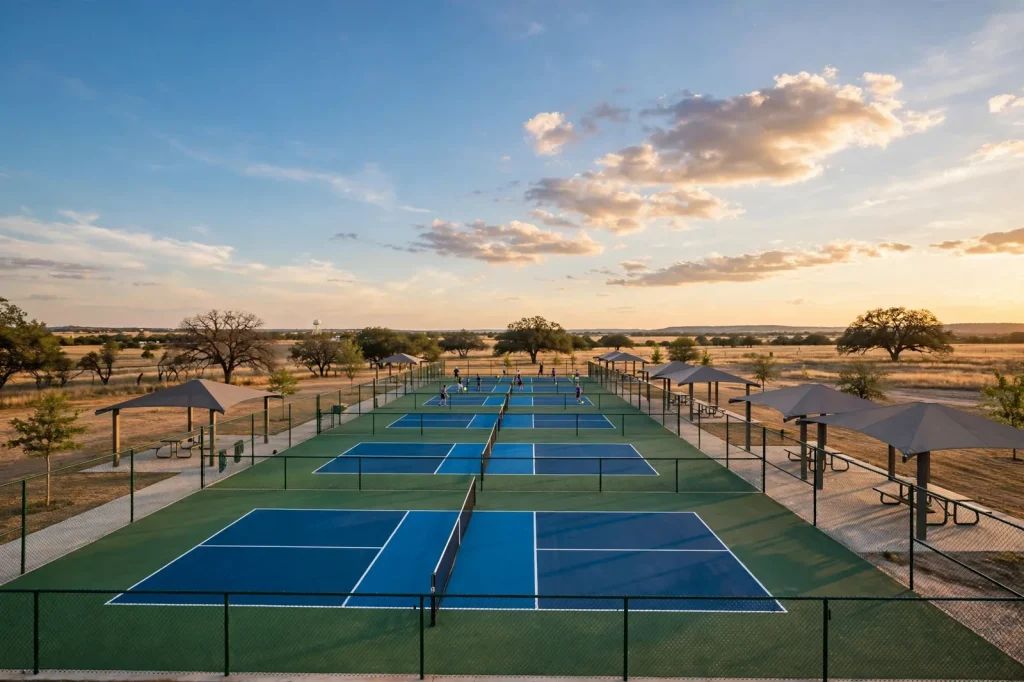
How To Find Pickleball Courts In Texas
USA Pickleball’s Places2Play directory is the fastest starting point, with listings across hundreds of Texas communities, from the Panhandle to the border.
City parks and recreation departments run most public courts. Their websites carry court locations, open play schedules, lesson registrations and league sign-ups.
Dedicated indoor pickleball clubs have spread quickly through the major metros, offering reserved courts, leagues and climate-controlled play. Community centers and YMCAs add more indoor options.
With no statewide association, local Facebook groups and USA Pickleball ambassadors are especially valuable for finding drop-in games in smaller cities and suburbs.
Schedules, guest policies and fees vary enormously between venues, so always confirm the details before driving across a Texas-sized metro.
Given the distances involved, read listings carefully before driving across town: confirm whether courts are dedicated, lit and reservable, and whether a venue is public or members-only. Texas offers every format imaginable, sometimes within the same suburb.
Where Play Concentrates In Texas
Dallas–Fort Worth is a national pickleball center. Brookhaven Country Club in Dallas hosts the UPA World Championships, and the PPA Texas Open is played at The Courts at McKinney.
Houston’s scene stretches across a vast metro, with indoor clubs and park courts serving the city and its sprawling suburbs in every direction.
Austin mixes serious club play with a famously social open play culture, while San Antonio’s scene keeps growing through parks, centers and new dedicated facilities.
El Paso anchors the far west, and the McAllen area leads a lively Rio Grande Valley community in the state’s sunny south.
Beyond the big metros, mid-sized cities and retirement communities sustain active weekly play, usually organized through recreation departments and local clubs.
Road-trippers should plan around the metros, since each big city can fill an entire weekend with open play, clinics and club sessions. Between them, mid-sized cities along the interstate corridors usually sustain at least one reliable weekly game.
Indoor Vs Outdoor Play In Texas
Summer heat defines the Texas calendar. From June into September, outdoor players start at sunrise or play under lights, while many move indoors at midday.
Indoor clubs thrive partly because of that heat: air-conditioned courts make year-round leagues and midday sessions comfortable even in the hottest months.
Autumn, winter and spring bring excellent outdoor weather across most of the state. Northern areas see occasional cold snaps, while the Valley stays mild nearly all winter.
Outdoor courts are typically hard courts in parks and master-planned communities, sometimes sharing fenced space with tennis. Indoor options range from recreation-center gym floors to premium club surfaces built to handle daily league play and summer-long schedules.
At big-city open play, expect organized rotations and, at peak times, a short wait between games. Many Texas clubs split sessions by level as numbers grow, which keeps matches competitive and lets true beginners play without pressure.
Leagues, Open Play And Community
Few states match Texas for top-end events: the UPA World Championships at Brookhaven and the PPA Texas Open at McKinney headline a calendar full of tournaments.
For everyone else, open play is the engine. Parks, centers and clubs run daily rotations where newcomers can join without a partner or a team.
Ladders, round robins and flex leagues run in every big metro, sorted by rating so matches stay competitive and fun at each level.
Beginners should look for intro clinics and beginner-only open play blocks, which most large clubs and recreation departments now schedule weekly.
Texas pickleball is famously social as well as competitive. Clubs run mixers, themed nights and beginner socials, while neighborhood open play groups often organize entirely through group chats, park noticeboards and word of mouth between regulars.
With so many players, finding your level is easy: ladders and leagues sort by rating bands, and most clubs offer a free assessment or trial session. Start a band lower than you think — Texas competition runs deep.
Before You Go: A Quick Checklist
- Confirm the session is on — heat, storms and events can change outdoor schedules quickly.
- Wear proper court shoes for support during lateral movement.
- Check reservation rules: in-demand clubs and courts may require booking well ahead.
- Bring plenty of water and sun protection for outdoor play.
- Arrive early for open play, since big-city rotations fill quickly.
- Check which ball the venue uses — indoor and outdoor balls are not the same.
Frequently Asked Questions
How do I find pickleball courts near me in Texas?
Start with USA Pickleball’s Places2Play directory, then check your city parks department and local pickleball Facebook groups for open play times near you.
Are there indoor pickleball courts in Texas?
Yes, many. Dedicated indoor clubs operate throughout the major metros, and community centers and YMCAs add more. Indoor play is especially popular in summer.
What is the best time of year for outdoor pickleball in Texas?
Autumn through spring is prime outdoor season in most of the state. In summer, play early in the morning or under lights in the evening.
Do I need a membership to play pickleball in Texas?
Often not. Public park courts are typically free, while dedicated clubs generally require membership or a guest fee for court time and leagues.
Where can beginners play in Texas?
Recreation centers and big clubs in Dallas–Fort Worth, Houston and Austin run beginner clinics and friendly open play. Smaller cities welcome newcomers at weekly sessions.
Does Texas have pickleball leagues and tournaments?
Yes, at every level. Local ladders and leagues run statewide, and Texas hosts elite events including the UPA World Championships and the PPA Texas Open.
Conclusion
With huge metro scenes and events that draw the best players in the world, Texas is an easy place to fall for pickleball. Find your nearest court and join a rotation.
Just starting out? Learn how to play pickleball, understand pickleball ratings, and explore our other Find Pickleball Court guides for more states.

Shoaib is the publisher of Pickleball Card. He oversees the site’s guides to pickleball rules, ratings, strategy and gear, all researched from primary sources — the USA Pickleball Rulebook, DUPR and manufacturer documentation — and updated as the game changes.