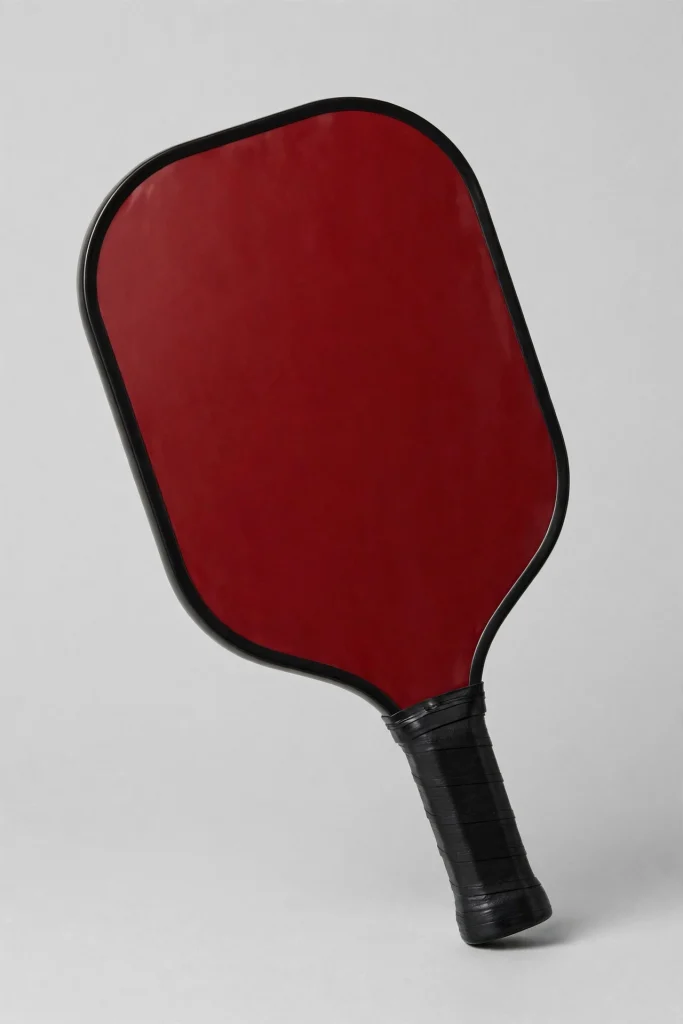
Some paddles are famous for a season. The Paddletek Bantam EX-L has been selling power for years — a polycarbonate face, a poly core, and a reputation built before foam cores existed.
It holds a pick in our best power paddles guide as the classic of the category, and this review gives it the full treatment.
The specifications below are Paddletek’s own published figures, as carried in that guide. Pickleballcard does not lab-test paddles, and fields Paddletek does not publish are marked as such.
Key Takeaways
- Velvet Textured Polycarbonate face over Paddletek’s Bantam PolyCore — a combination from before the raw-carbon era.
- Paddletek positions the Bantam family for power, and its own rating puts power first for this model.
- Published weight range of 7.8–8.4 oz, with a 5-inch grip length and 4.25-inch circumference — the full grip picture, officially stated.
- Paddletek does not publish the EX-L’s thickness or dimensions, and its box below says so rather than borrowing retailer figures.
- Best for players who want proven, uncomplicated power at a midweight they can still swing quickly.
The Short Answer
The Bantam EX-L is power the straightforward way: a responsive polycarbonate face and a poly core that returns pace, in a standard-feeling paddle that asks nothing unusual of you.
Newer foam and thermoformed builds chase the same thing with more technology. The EX-L’s case is that it never needed it.
Specifications (Manufacturer-Published)
| Face material | Velvet Textured Polycarbonate |
| Core | Bantam PolyCore |
| Thickness | Not published by Paddletek |
| Average weight | 7.8–8.4 oz |
| Grip length | 5 in |
| Grip circumference | 4.25 in |
| Shape / length × width | Not published by Paddletek |
| USA Pickleball approved | Not published by Paddletek |
Buy If
- You want proven power — Paddletek’s own rating puts power first for this model.
- You prefer a standard shape and a mid-weight build — a published 7.8–8.4 oz — that you can still swing fast.
- You like buying the known quantity: this design has been in players’ hands, unchanged in concept, for years.
Pass If
- You want every dimension published before buying — Paddletek does not state this model’s thickness or length and width.
- You want raw carbon spin texture — a velvet polycarbonate face is a smoother, different kind of surface.
- You want the newest core technology — foam-injected and thermoformed builds are the current direction, not this one.
The Design, Piece By Piece
Bantam PolyCore
Paddletek splits its range by intent: the Tempest line is its control family, and the Bantam line is built for power. The EX-L’s Bantam PolyCore is the engine of that intent.
It is a polymer honeycomb tuned to return energy rather than absorb it — the opposite philosophy from the soft Control Pro and Tempest cores elsewhere in our guides.
The published weight range, 7.8 to 8.4 ounces, keeps that power usable: heavy enough to plow, light enough to keep hand speed at the net.
Velvet Textured Polycarbonate Face
The face is polycarbonate with Paddletek’s velvet texture — the premium surface recipe of its generation, chosen for a responsive, slightly tacky strike.
It predates the raw-carbon era, so judge it on its own terms: consistent pace and a familiar, direct feel, rather than maximum grit.
Players who learned the game on polycarbonate often still prefer exactly this response, which is one reason the model endures.
Who It Suits
Intermediate and advancing players who drive the ball and finish at the net are the natural audience — the power guide places it for them.
It also suits the value-minded: a long-running model with published weight and grip figures is a safer blind buy than most.
And it suits players who want power without extremes — no 8.5-ounce hammer, no elongated lever, just a proven midweight build.
Who Should Skip It
Spin-first players should start with raw carbon, including the newer builds in our spin guide, where texture is the entire point.
Specification completists will stall on the unpublished thickness and dimensions, fairly enough.
And players who want their power from the newest constructions — foam walls, thermoforming — will find those stories told by other picks in the power guide.
Approval Status
Paddletek does not state an approval line for this model in the published material we verified, so this review does not claim one.
The Bantam line has a long tournament history, but the only honest instruction is the check: confirm the exact model on USA Pickleball’s current approved list before a sanctioned event.
How It Compares
Within Paddletek’s own range, the mirror image is the Tempest Wave Pro-C, reviewed here — raw carbon, a 14.3mm core, and control rated above power.
The EX-L is the older, simpler answer from the same company: polycarbonate, poly core, power first.
Against the modern foam builds around it in the power guide, it concedes technology and claims something else — a track record.
Frequently Asked Questions
What is the difference between the Paddletek Bantam and Tempest lines?
Intent. Paddletek builds the Bantam family for power — the EX-L’s own maker rating puts power first — and the Tempest family for control and forgiveness, with the Wave Pro-C’s ratings leading on forgiveness. Same company, opposite priorities.
How heavy is the Bantam EX-L?
Paddletek publishes a weight range of 7.8 to 8.4 ounces, squarely midweight. Individual paddles vary within a published range, so treat the span — not a single number — as the specification.
Is the Bantam EX-L good for control?
It is a power paddle that behaves. The standard shape and midweight build keep it manageable, but if control is your first priority, Paddletek’s own Tempest line — or our control guide — is the honest recommendation.
Is the Bantam EX-L approved for tournaments?
Paddletek’s published material for this model does not state an approval line, so check the exact model on USA Pickleball’s current approved paddle list before entering a sanctioned event. Lists are maintained over time, and the check takes a minute.
Why does Paddletek not publish the EX-L’s thickness?
Brands publish different fields for different models, and for the EX-L the thickness and overall dimensions are simply not in Paddletek’s published material. Our data box marks them as not published rather than filling them from retailer listings, which vary.
Conclusion
The Bantam EX-L is not the future of paddle design, and it does not pretend to be. It is the proven past, still doing its one job — power, plainly delivered — very well.
For the player who values that certainty over the newest core story, it remains one of the easiest recommendations in the power guide.

Shoaib is the publisher of Pickleball Card. He oversees the site’s guides to pickleball rules, ratings, strategy and gear, all researched from primary sources — the USA Pickleball Rulebook, DUPR and manufacturer documentation — and updated as the game changes.