
A pickleball is light, hollow and fast at close range, and most doubles is played a few feet from the net. That combination puts eyes in the ball’s path more often than players expect.
This roundup compares ten models sold for court eye protection, from certified protectors to performance sunglasses. Every impact claim below is printed exactly as its maker states it, at the level stated.
Where a brand names no standard, we say so. Where a rating covers other sports but not pickleball, we say that too, so you can judge each pick on evidence.
For the wider safety picture, including court positioning and partner communication, read our guide to pickleball safety and eye protection after this roundup.
Why Eye Protection Matters
Emergency-department data shows a steep rise. A 2025 study in JAMA Ophthalmology, using US injury surveillance data, estimated 3,112 pickleball-related eye injuries between 2005 and 2024, with more than a third in 2024 alone.
The same study found periocular lacerations in 35% of cases, corneal abrasions in 16% and iritis in 8%. Seventy percent of the injured players were aged 50 or older.
A separate analysis in the journal Eye, covering 2014 to 2023, estimated 2,573 injuries and a mean injured-player age of 58.3 years. Its yearly estimate rose from 77 injuries in 2021 to 1,470 in 2023.
The American Academy of Ophthalmology’s EyeNet magazine has documented the severe end: retinal tears, retinal detachment, a dislocated lens implant after a ricochet, and vitreous hemorrhage. In every documented case, the patient wore no protective eyewear.
EyeNet’s cited expert recommends protectors built to ASTM F3164, the racket-sports standard explained below. Our guide to common pickleball injuries covers the rest of the injury picture beyond the eyes.
Ophthalmologists also cite long-standing AAO guidance that around 90% of sports-related eye injuries could be prevented with appropriate protective eyewear. That figure covers sport generally, not pickleball alone, but the direction is clear.
Is Eyewear Mandatory?
No governing body currently requires it. USA Pickleball’s rules site records a 2024 proposal, Rule Change ID 1383, that would have mandated ASTM or ANSI-rated eyewear at sanctioned events.
Both the USAP Board and its Rules Committee disapproved the proposal. Their recorded position was that eye protection should be recommended, but that mandating it was not appropriate.
Individual clubs, facilities and events can still set their own eyewear policies, so check local rules before league or tournament play. A sponsored partnership is not a rule, either.
USA Pickleball’s official eyewear partnership, in place since 2020, is a sponsorship and a recommendation. It does not make any eyewear compulsory for any player.
How To Judge A Pair
Start with the standard named on the box. ASTM F3164 is the eye-protector standard written for racket sports, and its 2024 revision, F3164-24, is the first to add pickleball-specific test methods.
ASTM F803 is the older, broader sports eye-protector standard. Many proven protectors carry genuine F803 ratings, but its racket-sport provisions now live inside F3164, and its sport lists predate pickleball-specific testing.
ANSI Z87.1 is the workplace eye-protection standard, and it has two levels that matter here. Plain Z87, including the drop-ball test, is basic impact; Z87+ is the high-mass, high-velocity level.
ANSI Z80.3 is a general-purpose sunglass standard covering ordinary optics and impact for everyday shades. It is not a sports-protector rating, however impact-resistant the marketing sounds.
Beyond the rating, look for polycarbonate or Trivex lenses, wraparound coverage, and front-loaded lens designs that resist being driven inward. Regular dress glasses are not protectors, whatever the lens material.
Anti-fog coatings and venting matter because fogged eyewear gets taken off mid-session. Adjustable pads, sweat-gripping temples and straps keep a protector aligned through hard lateral movement.
Finally, replace a protector after a severe impact, even if it looks intact. Our guide to what to wear for pickleball covers the rest of your on-court kit.
Our Top 3 Picks
| Our Top 3 Picks | ||
 |
RIA Eyewear Reflex [Court HD+] Best Overall The one pick claiming the pickleball-named ASTM F3164 standard, with a ZEISS Court HD+ contrast lens. |
View On Amazon |
 |
Liberty Sport Rec Specs Maxx 20 Best For Prescription Players A dedicated Rx protector whose patented eyerim assembly accepts a wide range of prescription powers. |
View On Amazon |
 |
CRBN Pivot Best For Splitting Indoor And Outdoor Play A photochromic lens that runs nearly clear indoors and dark outdoors; basic-impact rating only, stated plainly. |
View On Amazon |
The 10 Best Pickleball Eyewear Picks
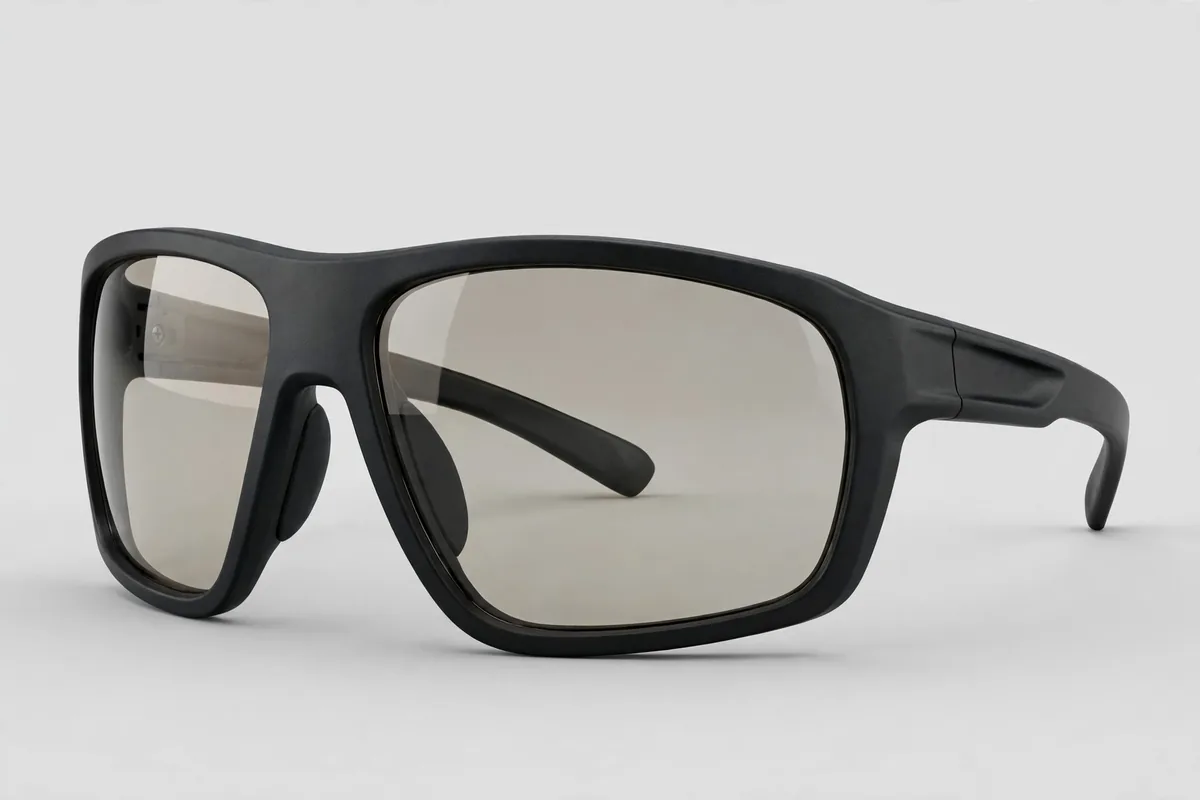
1. RIA Eyewear Reflex [Court HD+] — Best Overall
RIA builds eyewear specifically for racket sports, and the Reflex is its high-wrap semi-rim model for tennis and pickleball. The brand states this frame meets both ANSI Z87 and ASTM F3164 impact standards.
The Court HD+ lens is made by ZEISS, with a brown-amber tint and blue mirror coating tuned for ball tracking. RIA deliberately skips polarization, arguing polarized lenses can hurt depth perception on court.
Lenses swap across the line, including a clear indoor option and a photochromic option for changing light. The catch: this frame takes no prescription lenses, so Rx players need another RIA frame.
Specifications
| Lens options | Court HD+ ZEISS tint as sold; interchangeable Clear HD+, Hybrid Orange HD+ and Photochromic Radium HD+ across the line; non-polarized; UV400 |
| Frame | Semi-rim, high-wrap; adjustable temple pads; anti-fog coatings; frame material not stated by the brand |
| Impact rating (as published) | Brand states the model meets ANSI Z87 and ASTM F3164 impact standards |
| Prescription option | Not in this frame; Rx offered in other RIA frames (Contour, Aura, Versa, Vantage, Tempo, Forte) |
Buy If
- You want the one pick here claiming the pickleball-named ASTM F3164 standard
- You play outdoors and want a ZEISS contrast lens for ball tracking
- You do not need prescription lenses in the same frame
Pass If
- You need prescription lenses built into this frame
- You prefer a full-rim goggle with a retaining strap
2. Gearbox Vision Eyewear — Best Simple Plano Protector
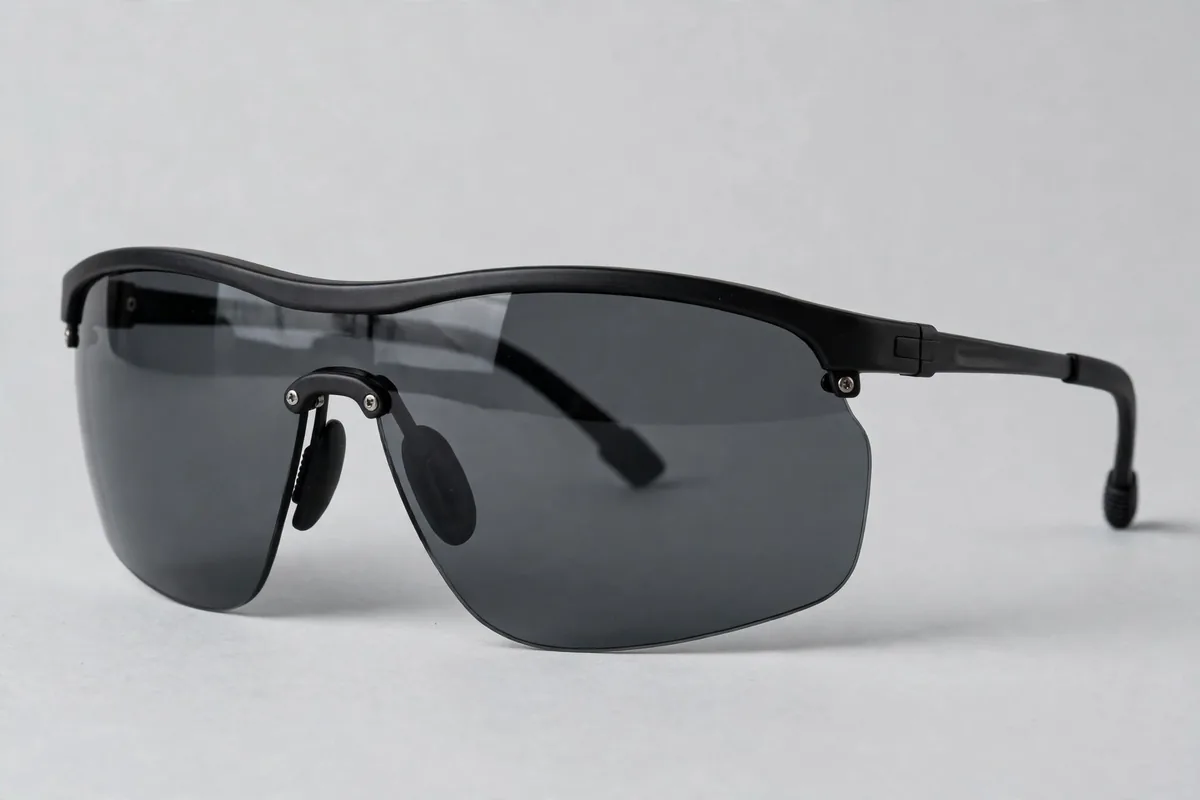
Gearbox is a pickleball-first brand, and its Vision eyewear is a straightforward semi-rimless design in polycarbonate. It comes in regular and Slim Fit sizes, which helps players between standard frame widths.
Gearbox states that its eyewear meets and goes beyond the ASTM F803-11 ball impact standard. That brand wording is carried across retailer listings, and we report the claim at exactly that level.
Four single-lens colors — clear, smoke, amber and blue — cover indoor and outdoor play, with anti-fog and anti-scratch coatings across the range. There is no prescription option and no over-glasses fit.
Specifications
| Lens options | Clear, smoke, amber or blue single lenses; anti-fog and anti-scratch coatings; UV400 |
| Frame | Polycarbonate, semi-rimless; regular and Slim Fit sizes |
| Impact rating (as published) | Brand states its eyewear meets and exceeds ASTM F803-11 ball impact standards (brand claim carried by retailers) |
| Prescription option | No |
Buy If
- You want a plano protector carrying an F803-11 brand claim
- You need a slimmer frame size than standard
Pass If
- You wear prescription glasses and need an Rx solution
- You want a rating under the newer standard that names pickleball
3. CRBN Pivot — Best For Splitting Indoor And Outdoor Play
CRBN’s Pivot is a modular TR90 frame that converts between full-frame and edgeless configurations. Two lenses come in the box: a photochromic lens and an amber contrast lens for low light.
The photochromic lens is rated from 15% to 83% visible light transmission, so it runs nearly clear indoors and dark outdoors. Spare tints, including clear and mirrored options, are sold separately.
Be clear-eyed about its rating. Retailer copy states the Pivot meets or exceeds ANSI Z87.1 (drop ball) and Z80.3 — the basic impact level, not Z87+ high impact, and no ASTM rating.
Specifications
| Lens options | Photochromic FortifEYE lens (15–83% VLT) plus amber contrast lens in the box; spare tints sold separately; UV400 |
| Frame | Modular TR90; converts between full-frame and edgeless; polycarbonate lenses |
| Impact rating (as published) | Meets or exceeds ANSI Z87.1 (drop ball) and Z80.3, per retailer copy — basic impact level only |
| Prescription option | Yes, via a prescription lens insert included in the box |
Buy If
- You split indoor and outdoor play and want one photochromic lens
- You are happy with an insert-style prescription setup
Pass If
- You want a Z87+ high-impact or ASTM-rated protector
- You want your prescription glazed directly into the frame
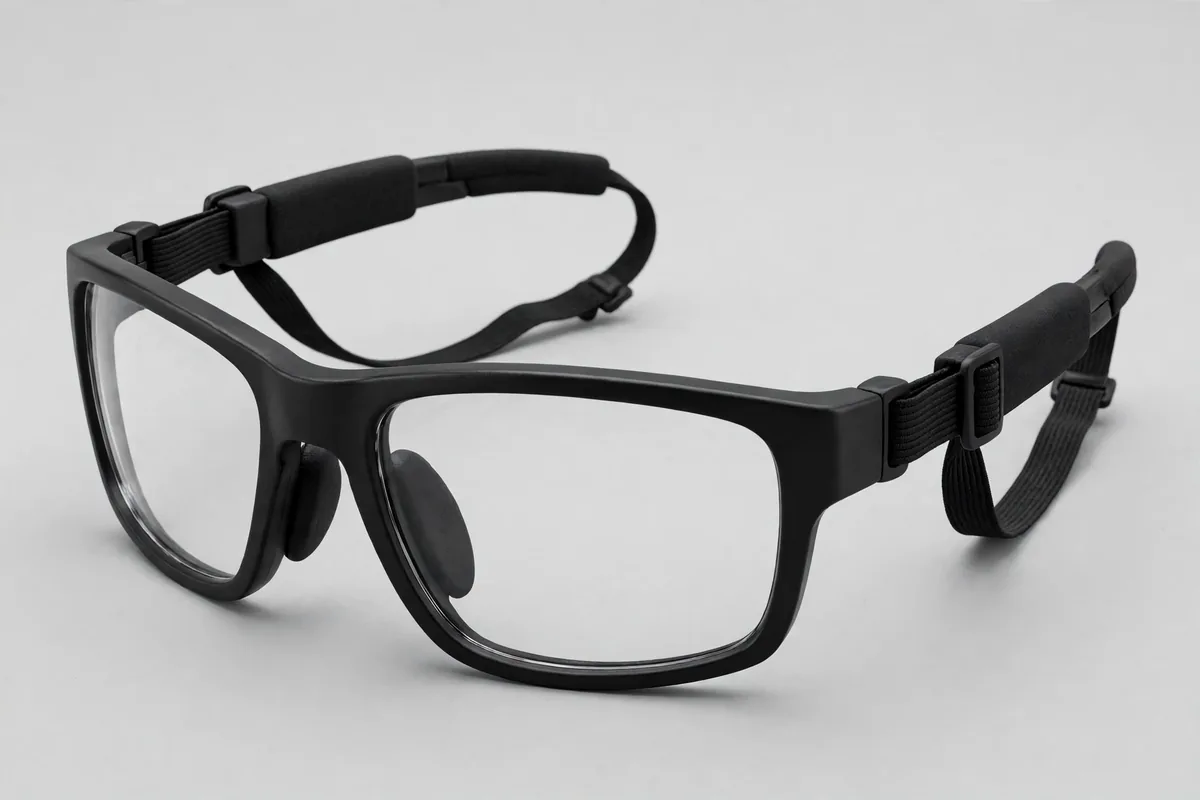
4. Liberty Sport Rec Specs Maxx 20 — Best For Prescription Players
Liberty Sport’s Rec Specs line is built for prescription wearers first. The Maxx 20 uses a patented eyerim assembly designed to accept a wide range of prescription powers securely.
The brand states it meets or exceeds ASTM F803 impact standards for sports including basketball, tennis, soccer and squash. Note that F803’s lists predate pickleball-specific testing and do not name pickleball.
It was also the first protective sports eyewear to receive the American Optometric Association’s Seal of Acceptance. Padding at the temples and bridge, plus an included strap, keep it seated during play.
Specifications
| Lens options | Plano or prescription; clear as standard, tints through the maker’s lens program |
| Frame | Padded temples and bridge; adjustable strap and case included; youth and adult-narrow sizes; material not stated by the brand |
| Impact rating (as published) | Brand states it meets or exceeds ASTM F803 for sports including basketball, tennis, soccer and squash (pickleball not named) |
| Prescription option | Yes — patented eyerim assembly accepts a wide range of prescription powers |
Buy If
- You need a substantial prescription inside a rated protector
- You want strap retention for hard lateral movement
Pass If
- You want testing under the newer pickleball-specific standard
- You prefer a low-profile sunglass style over a goggle fit
5. Liberty Sport Rec Specs F8 Morpheus II — Best Second Rx Goggle Shape
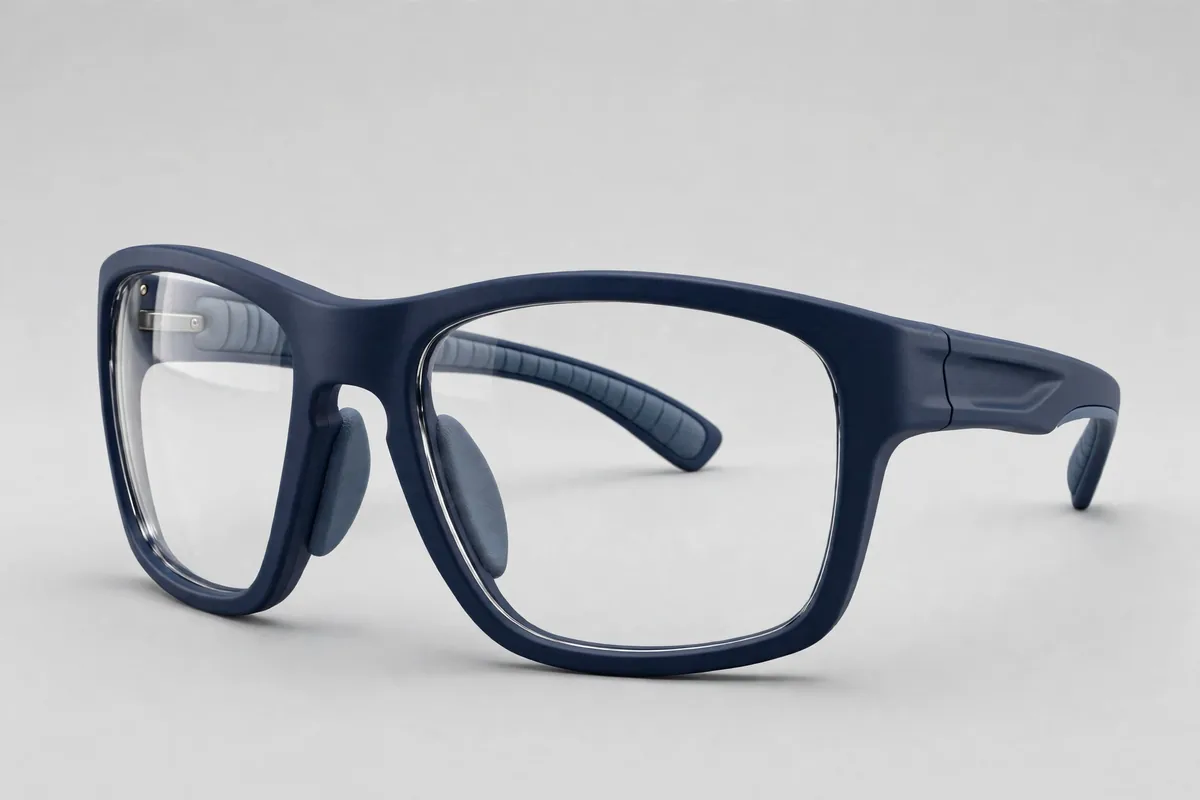
The F8 Morpheus II is Liberty Sport’s second goggle-style option here, with sculpted padded temples and a padded bridge. It ships with an adjustable strap and a case, in two adult sizes.
Its 6-base lens curve is designed to suit a wide range of prescription powers. Manufacturer-direct prescription lenses, including single vision, are available through the maker’s own lens program.
Retailer listings state it meets or exceeds ASTM F803 impact resistance for sports such as racquetball, squash and tennis. As with the Maxx 20, that rating predates pickleball-specific testing.
Specifications
| Lens options | Polycarbonate UV400; clear as standard, tints through the manufacturer’s lens program |
| Frame | Sculpted padded temples, padded bridge; adjustable strap and case included; two adult sizes (53 / 55) |
| Impact rating (as published) | Meets or exceeds ASTM F803 impact resistance, per retailer listing |
| Prescription option | Yes — 6-base curve suits a wide Rx range; manufacturer-direct Rx lenses |
Buy If
- Your prescription suits a flatter 6-base lens curve
- You want a second Rx goggle shape to compare against the Maxx 20
Pass If
- You want plano-only eyewear with no goggle bulk
- You need a rating that names pickleball explicitly
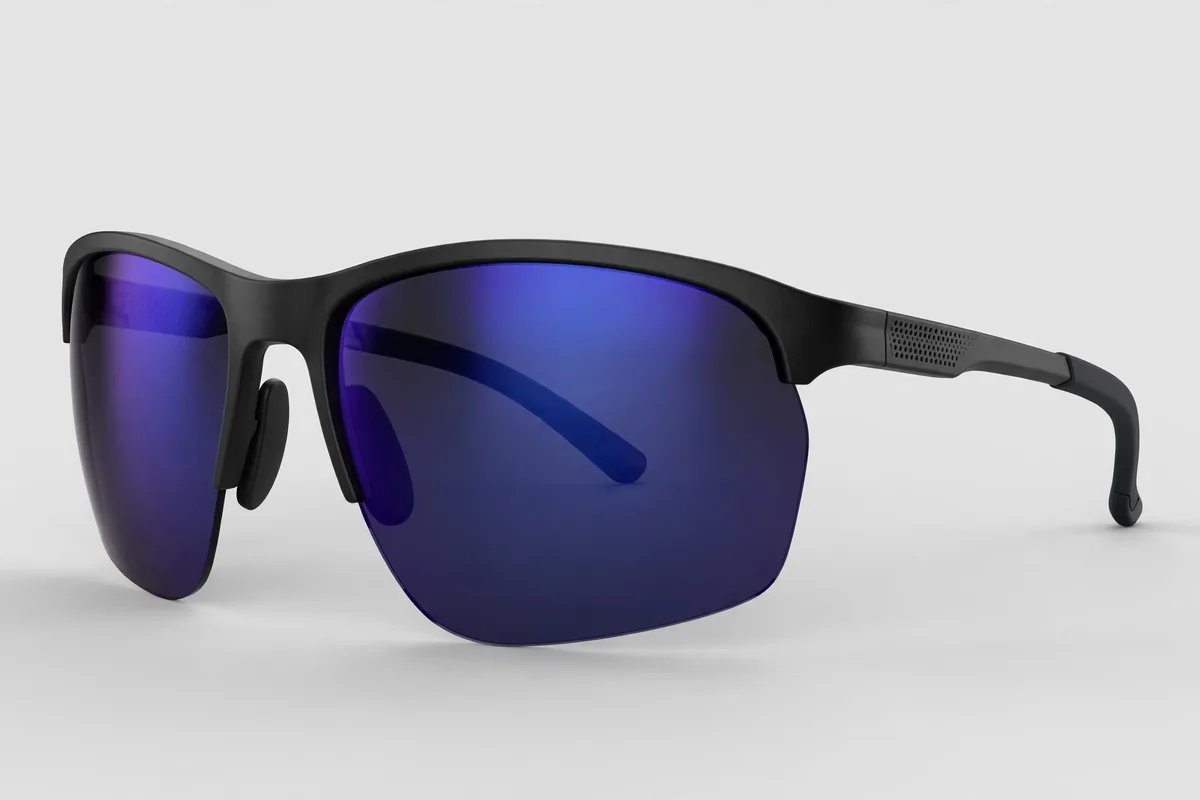
6. Oakley Flak 2.0 XL — Best Performance Sunglass, Not Rated Protection
Plenty of players already own the Flak 2.0 XL, so it earns a place here, labelled honestly. This is a premium performance sunglass, not a certified sports eye protector.
It carries no ANSI Z87 stamp and no ASTM F803 or F3164 rating. Oakley’s Z87-stamped eyewear sits in its separate Standard Issue line, which is not the model sold here.
What it does offer is excellent optics: PRIZM tints, an O-Matter frame, and nose pads and earsocks that grip harder as you sweat. Treat it as glare and comfort gear, not rated protection.
Specifications
| Lens options | PRIZM tints (some polarized), interchangeable; Plutonite lenses filtering 100% UVA/UVB/UVC |
| Frame | O-Matter semi-rimless; Unobtainium earsocks and nose pads; Three-Point Fit |
| Impact rating (as published) | None — no ANSI Z87 stamp and no ASTM sports rating on this consumer model |
| Prescription option | Yes, through Oakley’s own prescription program |
Buy If
- You want premium sunglass optics for outdoor play and accept the trade-off
- You already own a pair and play casual outdoor games
Pass If
- You want a tested, rated eye protector instead
- You play competitive net play where deflections are fastest
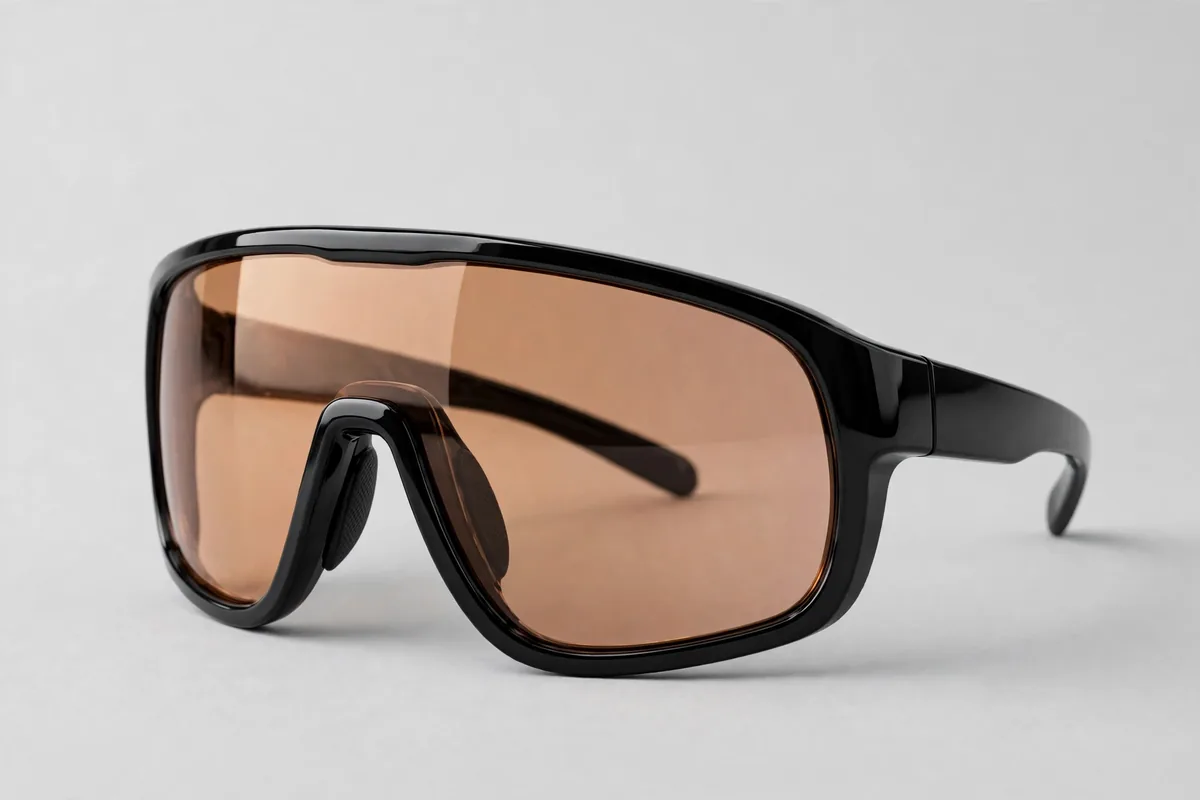
7. Dink Eyewear Daytona — Best Pickleball-Specific Contrast Tints
Dink Eyewear designs specifically for pickleball, and the Daytona is its main lensed model, with a smaller Daytona Petite alongside it. Its ColorBoost lenses are tuned to pickleball ball colors.
The frames are Italian-designed and built to stay stable through lateral movement, with full UV protection. Multiple tints include indoor-oriented options for players who mostly play under lights.
The honest limit: Dink says its frames and lenses exceed ANSI safety standards, but names no specific standard anywhere. That is marketing language, not a rating, and we score it accordingly.
Specifications
| Lens options | ColorBoost contrast lenses in multiple tints, including indoor-oriented options; Petite sizing available |
| Frame | Italian-designed; built to stay stable during lateral movement; full UV protection per the brand |
| Impact rating (as published) | No named standard — the brand says its eyewear exceeds ANSI safety standards without naming one (marketing language, not a rating) |
| Prescription option | Many styles can be made with prescription lenses, per retailer, depending on frame and prescription |
Buy If
- You value pickleball-specific contrast tints and on-court fit
- You want the smaller Petite size
Pass If
- You want a named, tested impact rating behind the claim
- You need guaranteed prescription compatibility before ordering
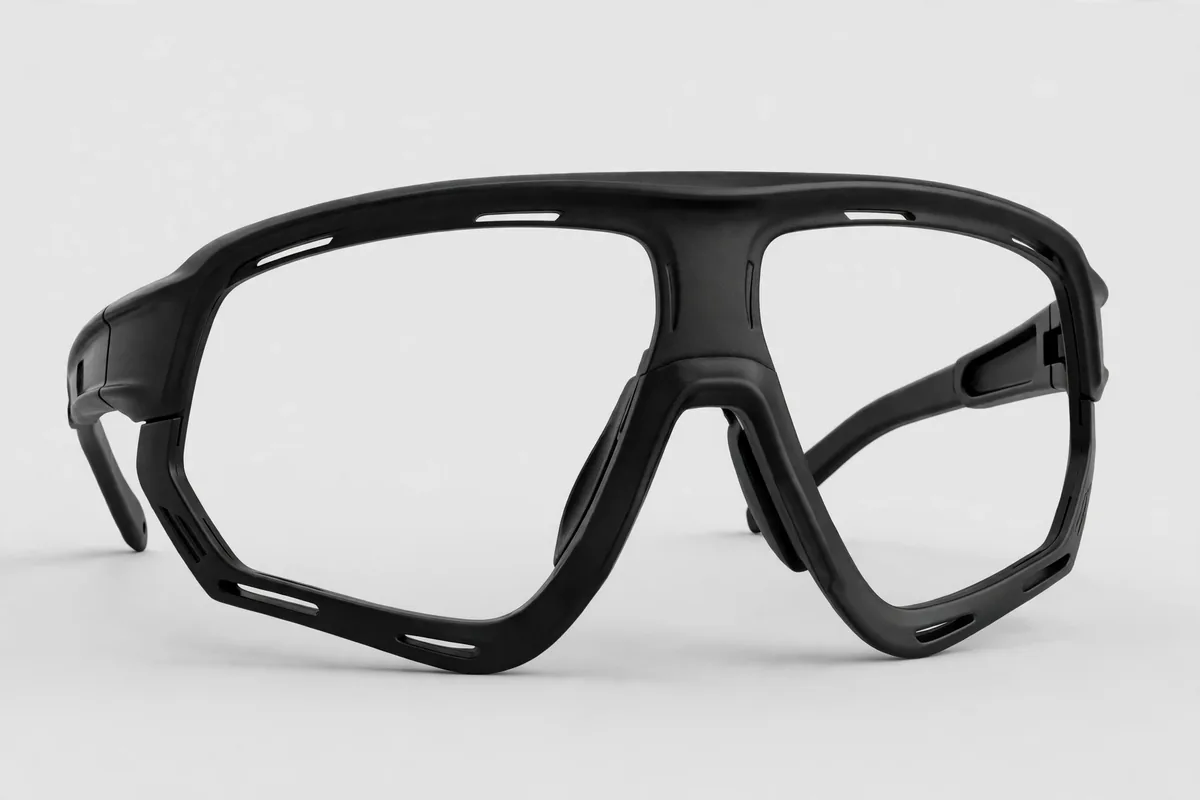
8. Dink Shield — The Lensless Deflector, With Its Caveats
The Shield has no lens at all. It is a wrapped frame whose openings are far smaller than a regulation ball, so an incoming ball should meet frame first and deflect.
It exists for players who quit wearing glasses because of fog and heat. With no lens, there is nothing to fog, and nothing between your eyes and the air.
Dink’s own guide is blunt: the Shield must not be described as ASTM F3164-24 certified, is not sealed, and is not intended to stop fingers, fragments or smaller projectiles. We agree with the maker.
Specifications
| Lens options | None — lensless deflector frame |
| Frame | Lens-free wrapped frame; openings substantially smaller than a regulation ball |
| Impact rating (as published) | None — the brand states it must not be described as ASTM F3164-24 certified |
| Prescription option | No — accepts no Rx lenses and must not be worn over ordinary glasses |
Buy If
- Fogging made you abandon lensed eyewear entirely
- You accept a deflector that sits outside every impact standard
Pass If
- You want certified, tested eye protection
- You wear glasses or need prescription lenses
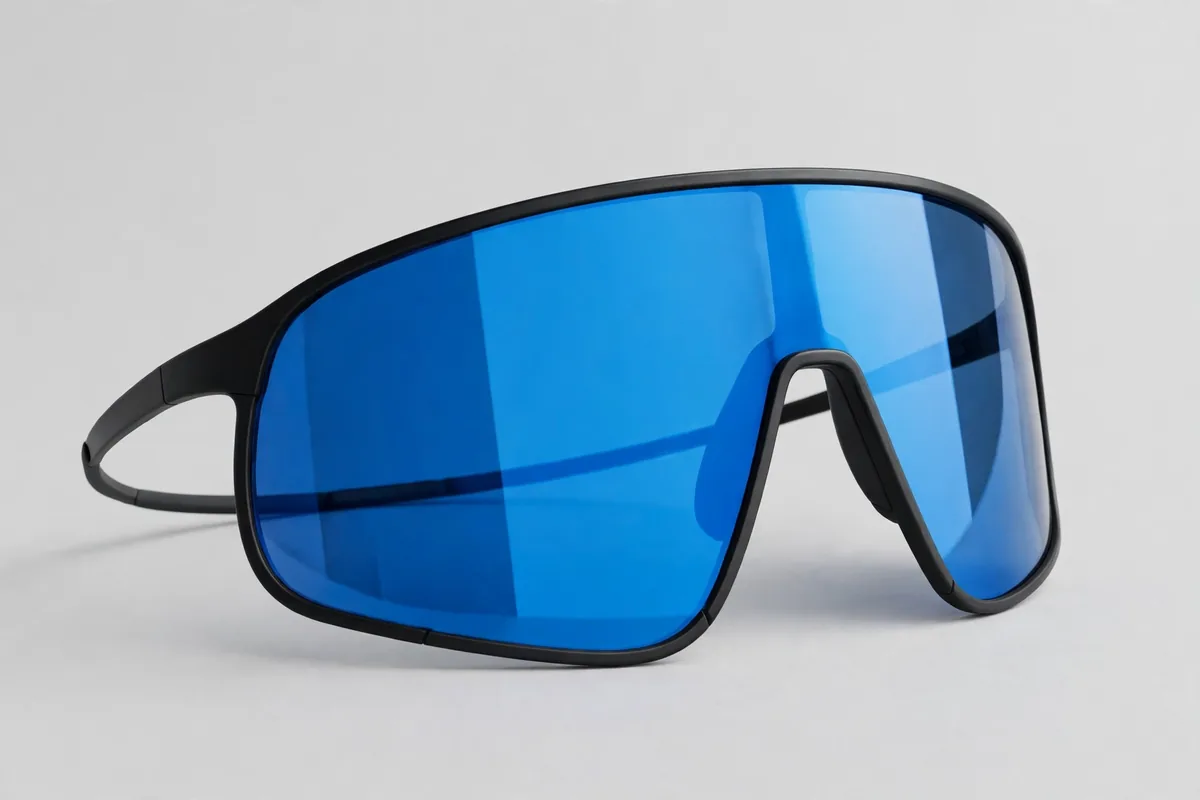
9. Tifosi Sanctum — Best Lightweight Sport Sunglass, Not Rated Protection
The Sanctum is a lightweight shield-style sport sunglass, 26 grams in a plant-based Thrive frame. Tifosi lists it for tennis and pickleball among several sports, with a shatterproof polycarbonate lens.
Tifosi deserves credit for candor. Its own FAQ states that only its Tactical collection meets ANSI Z87.1, and warns that other models “should not be considered a permanent shield against injury.”
The Sanctum’s lenses meet ANSI Z80.3, the general-purpose sunglass standard — not a sports-protector rating. As a comfortable, grippy sunglass it works well; as eye protection it is unrated.
Specifications
| Lens options | Shatterproof polycarbonate shield lens, 100% UVA/UVB (tints such as Cobalt Blue Mirror) |
| Frame | Thrive plant-based frame, 26 g, medium–large fit; hydrophilic rubber nose pads |
| Impact rating (as published) | None for this model — Tifosi states only its Tactical line meets ANSI Z87.1; this model’s lenses meet ANSI Z80.3 general-purpose standards |
| Prescription option | Not in this model; Rx is offered on other designated Tifosi frames |
Buy If
- You want a light, comfortable sport sunglass for casual outdoor play
- You value the maker’s honesty about what the model is not
Pass If
- You want rated eye protection — that is Tifosi’s Tactical line, not this model
- You play fast net exchanges against hard hitters
10. Zenni Sport Protective Goggles — Best Prescription-First Goggles
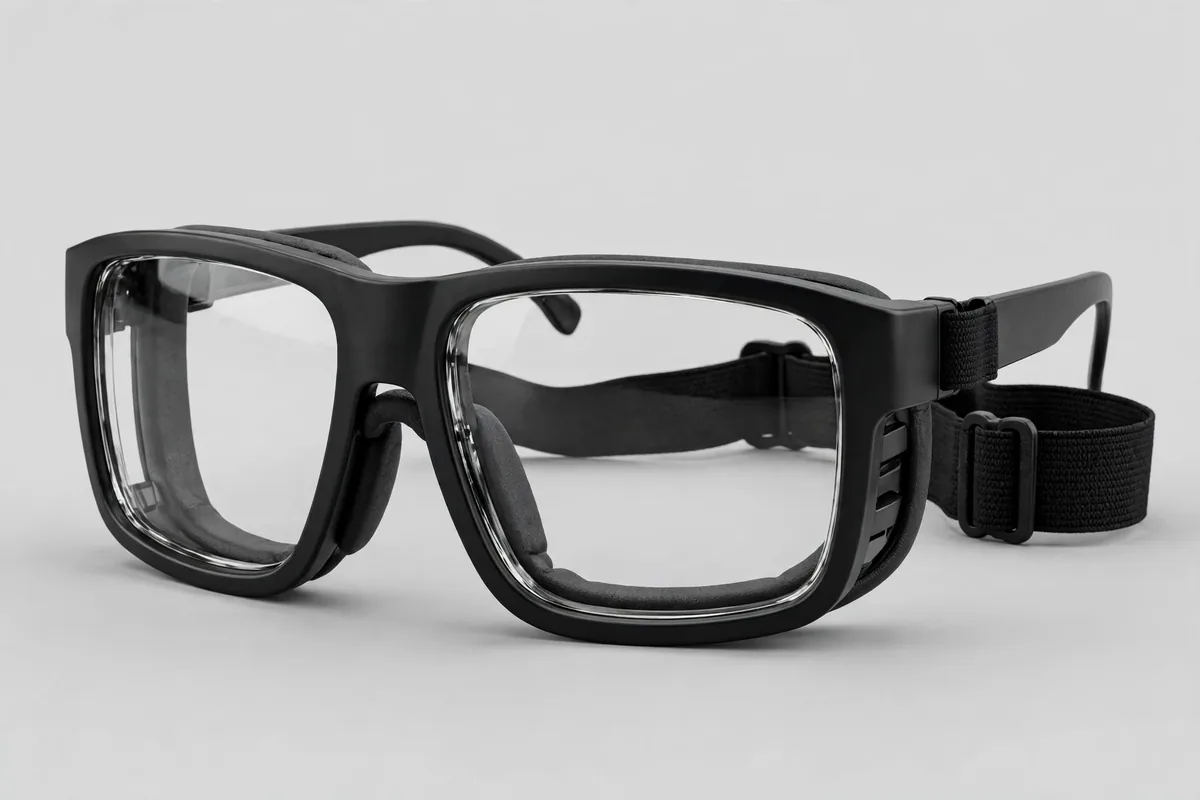
Zenni’s sport protective goggles are a prescription-first product: a flexible TR90 full-rim goggle frame fitted with your own clear prescription lenses in polycarbonate or Trivex.
Zenni’s own information card states the goggles were tested compliant with ASTM F803-19 for basketball, soccer, badminton and handball. Pickleball is not in the brand’s list, whatever review sites claim.
The published prescription range runs from −5.00 to +2.00 sphere, with cylinder from −4 to +4. Zenni advises ordering frame and lenses together, and replacing the goggles every one to two years with frequent use.
Specifications
| Lens options | Clear prescription lenses in polycarbonate or Trivex |
| Frame | Flexible TR90 full-rim goggle; non-slip fit; sizes include a large (size 60) |
| Impact rating (as published) | Zenni states F803-19 compliance for basketball, soccer, badminton and handball — pickleball is not named |
| Prescription option | Yes — prescription-first; published range sphere −5.00 to +2.00, cylinder −4 to +4 |
Buy If
- You want goggles built around your own prescription
- Your prescription falls inside the published range
Pass If
- Your prescription falls outside the published range
- You need a rating that names pickleball explicitly
Compare The Specs Side By Side
| Compare The Specs Side By Side | ||||
| Pick | Lens options | Frame | Impact rating (as published) | Prescription option |
|---|---|---|---|---|
| RIA Eyewear Reflex [Court HD+] | Court HD+ ZEISS tint as sold; interchangeable Clear HD+, Hybrid Orange HD+ and Photochromic Radium HD+ across the line; non-polarized; UV400 | Semi-rim, high-wrap; adjustable temple pads; anti-fog coatings; frame material not stated by the brand | Brand states the model meets ANSI Z87 and ASTM F3164 impact standards | Not in this frame; Rx offered in other RIA frames (Contour, Aura, Versa, Vantage, Tempo, Forte) |
| Gearbox Vision Eyewear | Clear, smoke, amber or blue single lenses; anti-fog and anti-scratch coatings; UV400 | Polycarbonate, semi-rimless; regular and Slim Fit sizes | Brand states its eyewear meets and exceeds ASTM F803-11 ball impact standards (brand claim carried by retailers) | No |
| CRBN Pivot | Photochromic FortifEYE lens (15–83% VLT) plus amber contrast lens in the box; spare tints sold separately; UV400 | Modular TR90; converts between full-frame and edgeless; polycarbonate lenses | Meets or exceeds ANSI Z87.1 (drop ball) and Z80.3, per retailer copy — basic impact level only | Yes, via a prescription lens insert included in the box |
| Liberty Sport Rec Specs Maxx 20 | Plano or prescription; clear as standard, tints through the maker’s lens program | Padded temples and bridge; adjustable strap and case included; youth and adult-narrow sizes; material not stated by the brand | Brand states it meets or exceeds ASTM F803 for sports including basketball, tennis, soccer and squash (pickleball not named) | Yes — patented eyerim assembly accepts a wide range of prescription powers |
| Liberty Sport Rec Specs F8 Morpheus II | Polycarbonate UV400; clear as standard, tints through the manufacturer’s lens program | Sculpted padded temples, padded bridge; adjustable strap and case included; two adult sizes (53 / 55) | Meets or exceeds ASTM F803 impact resistance, per retailer listing | Yes — 6-base curve suits a wide Rx range; manufacturer-direct Rx lenses |
| Oakley Flak 2.0 XL | PRIZM tints (some polarized), interchangeable; Plutonite lenses filtering 100% UVA/UVB/UVC | O-Matter semi-rimless; Unobtainium earsocks and nose pads; Three-Point Fit | None — no ANSI Z87 stamp and no ASTM sports rating on this consumer model | Yes, through Oakley’s own prescription program |
| Dink Eyewear Daytona | ColorBoost contrast lenses in multiple tints, including indoor-oriented options; Petite sizing available | Italian-designed; built to stay stable during lateral movement; full UV protection per the brand | No named standard — the brand says its eyewear exceeds ANSI safety standards without naming one (marketing language, not a rating) | Many styles can be made with prescription lenses, per retailer, depending on frame and prescription |
| Dink Shield | None — lensless deflector frame | Lens-free wrapped frame; openings substantially smaller than a regulation ball | None — the brand states it must not be described as ASTM F3164-24 certified | No — accepts no Rx lenses and must not be worn over ordinary glasses |
| Tifosi Sanctum | Shatterproof polycarbonate shield lens, 100% UVA/UVB (tints such as Cobalt Blue Mirror) | Thrive plant-based frame, 26 g, medium–large fit; hydrophilic rubber nose pads | None for this model — Tifosi states only its Tactical line meets ANSI Z87.1; this model’s lenses meet ANSI Z80.3 general-purpose standards | Not in this model; Rx is offered on other designated Tifosi frames |
| Zenni Sport Protective Goggles | Clear prescription lenses in polycarbonate or Trivex | Flexible TR90 full-rim goggle; non-slip fit; sizes include a large (size 60) | Zenni states F803-19 compliance for basketball, soccer, badminton and handball — pickleball is not named | Yes — prescription-first; published range sphere −5.00 to +2.00, cylinder −4 to +4 |
Frequently Asked Questions
Do I really need protective eyewear to play pickleball?
Most doubles is played close to the net, where deflections arrive faster than a blink. US data estimated 3,112 pickleball eye injuries from 2005 to 2024, and ophthalmologists cite guidance that about 90% of sports eye injuries are preventable with proper protection.
Which impact rating should I look for?
Look for a named standard. ASTM F3164-24 is written for racket sports and names pickleball; F803 ratings are genuine but older. Under ANSI Z87.1, only the Z87+ level means high impact — a drop-ball claim is basic.
Is eyewear required at tournaments or leagues?
No national mandate exists. USA Pickleball’s board and rules committee rejected a mandatory-eyewear proposal while recommending protection. Some clubs and events set their own policies, so check local rules before you register.
Can I just play in my regular glasses?
Ophthalmologists advise against it. In the AAO’s 2025 survey, most players who said they wore eyewear were in ordinary prescription glasses, which are not built to absorb a ball impact and can make one worse.
I wear prescription lenses. What are my options?
Three routes work: direct-glazed sport frames like Liberty Sport’s, an insert behind a plano shield like the CRBN Pivot, or a brand prescription program. Contacts under a plano protector are the fourth common option.
Should I choose clear or tinted lenses?
Clear suits indoor and night play. Amber, rose and brown contrast tints help the ball stand out outdoors, and photochromic lenses cover both. Some court brands avoid polarized lenses, arguing they can distort depth perception.
Whichever route you choose, a named rating and a secure fit matter more than tint fashion. Start with the standard, then pick the lens for your venue.

Shoaib is the publisher of Pickleball Card. He oversees the site’s guides to pickleball rules, ratings, strategy and gear, all researched from primary sources — the USA Pickleball Rulebook, DUPR and manufacturer documentation — and updated as the game changes.